
Basic research and rare diseases: when the study of the exception illuminates the rule

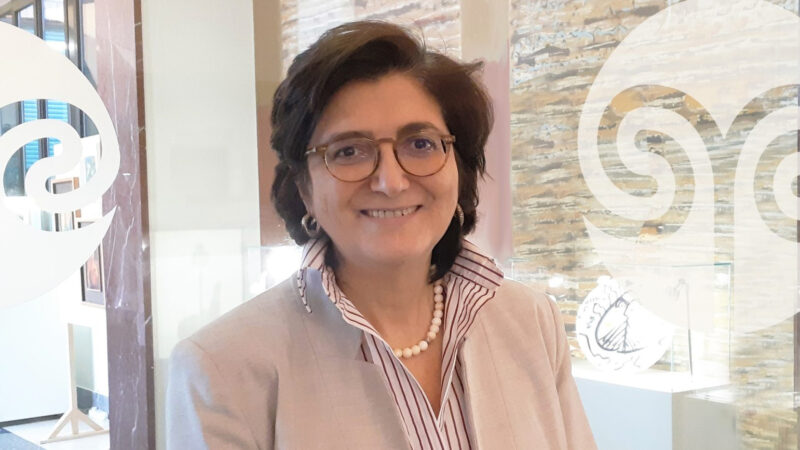
Prof. Granucci opened her presentation by expressing a positive surprise at the atmosphere of the conference: “I must say I was very positively surprised by the optimism — but also the concreteness — of people who do not work directly in this field, because it is not so common, especially in regions that are less ‘celebrated’ than, for example, Lombardy.”
This observation touches on an important point: often ambitious healthcare research and innovation projects struggle to find fertile ground outside the major metropolitan centres. The fact that in Ancona, in the Marche region, a concrete atmosphere of optimism prevails represents an important signal for the success of the HEAL ITALIA project as a national network genuinely distributed across the territory.
Rare diseases as a natural laboratory of human physiology
The most significant contribution of Prof. Granucci concerns the intrinsic knowledge value of rare diseases for basic research. As she explained, “if one wants to develop drugs for Precision Medicine, one must know the molecular mechanisms underlying physiology and pathology — that is, physiopathology.”
Normally, in order to study the function of a gene, researchers create artificial experimental models in which the gene is eliminated (knockout) or overexpressed. However, rare diseases offer something unique: real patients in whom a specific genetic mutation produces observable effects in a natural, non-artificial biological context.
As Granucci emphasised, “even by studying a single mutated gene in real patients, valuable information can be obtained about the function of that gene and the physiological mechanism it regulates.” This approach is far more powerful from a knowledge standpoint than experimental models, because the mutation acts in the complex environment of a whole human organism, with all its biological interactions and compensations.
In this sense, rare diseases represent “natural experiments” that biology has conducted spontaneously, allowing researchers to understand mechanisms that would otherwise be difficult to study. The study of the exception illuminates the rule: understanding what happens when a gene is mutated helps to understand what that gene does under normal conditions.
The ethical dimension of rare disease research
An often overlooked aspect, highlighted by Prof. Granucci, is the particular ethical dimension of the work of a researcher dealing with rare diseases. “Often people do not question how direct an impact their work has on the lives of patients, but in this field it is evident,” she stated.
When studying a common disease, a single scientific contribution fits into a vast landscape of parallel research. In rare diseases, on the other hand, each discovery can have a direct and immediate impact on the lives of a few people — but for those people it can make an enormous difference. This creates a closer bond between research and patient, a more direct responsibility.
This ethical awareness must not, however, become a paralysing constraint. On the contrary, it can be a powerful motivation for the researcher, who sees the immediate meaning of their work.
The challenges of the researcher: scarcity of samples and limited funding
Prof. Granucci clearly identified the main challenges that researchers face in the field of rare diseases. The first is the scarcity of biological samples. “From the researcher’s perspective, the rarity of patients and biological samples is a significant obstacle. Samples are essential for carrying out research, and their scarcity makes it difficult to conduct meaningful studies.”
The second challenge concerns funding, which is particularly critical for basic researchers. “Funding is insufficient, and for us basic researchers it is even more limited, because we do not have access to funding from the Ministry of Health,” Granucci explained. In Lombardy there are some opportunities through foundations such as Telethon, Cariplo and the Fondazione per la Ricerca Biomedica, but resources remain limited relative to needs.
This situation creates a paradox: rare diseases offer unique scientific opportunities, but their very rarity makes it difficult to obtain the funding needed to study them. Major funding bodies tend to favour research on more common conditions, with impact on larger numbers of patients.
The crucial role of public-private partnerships
To overcome the funding problem, Prof. Granucci emphasised the importance of public-private partnerships. “It is unlikely that a ministry will decide to fund very rare diseases, whereas private entities or foundations can be more agile,” she observed.
Private foundations, patient associations and pharmaceutical companies can have different and complementary motivations compared to public bodies for investing in rare disease research. A foundation created by families of patients, for example, can concentrate significant resources on a single ultra-rare condition that would be unlikely to attract competitive public funding.
The public-private partnership model adopted by HEAL ITALIA represents precisely this integrated approach, in which universities, IRCCS, research institutions and private companies collaborate by pooling competencies and resources.
Biobanks and spatial omic technologies: a methodological revolution
A central element of Prof. Granucci’s presentation was the role of biobanks and new omic technologies — in particular spatial ones. As she recalled, “Professor Moroncini has already explained the complex work behind sample conservation. Now, however, thanks to omic technologies, and in particular spatial ones — such as spatial transcriptomics — we can obtain detailed information on gene expression while also maintaining the spatial context of the tissue.”
Spatial transcriptomics represents a qualitative leap compared to previous technologies. Traditionally, in order to analyse gene expression in a tissue, it was necessary to dissociate the cells, thereby losing all information about their spatial organisation. With spatial technologies, on the other hand, it is possible to know what each individual cell expresses and how it interacts with neighbouring cells, while maintaining the three-dimensional structure of the tissue.
This is particularly important for rare diseases, where the available samples are often very few. Being able to extract the maximum information from every single sample becomes crucial. As Granucci stated, “even simply confirming a hypothesis obtained with these tools, using an in vitro model, allows us to obtain very precise knowledge.”
A case study: Langerhans cell histiocytosis
To illustrate concretely how research on rare diseases is conducted, Prof. Granucci presented an example drawn from her own work: Langerhans cell histiocytosis — a rare disease that primarily affects children.
This condition involves cells of the innate immune system that become hyperproliferative due to mutations in signal transduction pathways, in particular the MAP kinase pathway. In 75% of cases the mutations are known, but in the remaining 25% of patients the molecular cause remains unknown.
The research group of Prof. Granucci is exploring the hypothesis that the mutations may also involve the cytoskeleton — the protein structure that gives shape to cells and regulates their movement. This research is made possible by collaboration with Metello Innocenti, an expert in the field, and by the availability of samples collected by a dermatologist at the Policlinico di Milano.
The working hypothesis is that cell hyperproliferation derives from an alteration in the interaction between two cellular pathways: the one that regulates proliferation and the one that regulates migration. “Normally, a cell that is migrating does not proliferate. If this ability to migrate is compromised, the cell may accumulate and proliferate abnormally,” Granucci explained.
This example illustrates several key aspects of rare disease research: the importance of clinical samples, the value of collaborations between experts from different disciplines, the formulation of hypotheses based on understanding normal physiological mechanisms, and the use of advanced technologies to test them.
Three challenges for the future
In the concluding part of her presentation, Prof. Granucci identified three main challenges for the future of rare disease research. Well-structured rare disease centres and biobanks — without a solid infrastructure for the collection, conservation and distribution of biological samples, research cannot progress. Centres such as those created by HEAL ITALIA are fundamental not only for conserving samples, but also for ensuring that they are collected with standardised protocols and accompanied by accurate clinical data. Multidisciplinary and international collaborations — the scarcity of samples requires the aggregation of patients from different centres. But beyond numbers, the integration of competencies is also needed: molecular biologists, immunologists, clinicians and bioinformaticians must work together. As demonstrated by the example of Langerhans cell histiocytosis, collaboration between experts in proliferative pathways and experts in the cytoskeleton made it possible to formulate an innovative hypothesis. Continuity of funding — basic research requires time. Studying the molecular mechanisms of a rare disease, formulating hypotheses, testing them on experimental models and validating them on clinical samples is a process that can take years. Short-term funding, typical of competitive calls, is not always appropriate. A long-term vision and a guarantee of continuity are needed.
The value of HEAL ITALIA centres for basic research
As Prof. Granucci emphasised, rare disease centres such as those of HEAL ITALIA are important not only for patient care, but also “for building solid projects to present to funders.” A well-structured centre — with certified biobanks, advanced technologies, trained personnel and collaboration networks — represents a platform on which to build competitive research proposals.
Furthermore, the existence of a national network makes it possible to multiply the impact of research. A hypothesis formulated by studying patients in Ancona can be tested on samples conserved in Cagliari or Milan. The technologies available in one centre can be made available to researchers at other centres. Competencies are shared and strengthened.
From the laboratory to the patient: the perspective of Spoke 5
As coordinator of Spoke 5 of HEAL ITALIA — dedicated to the identification of new therapeutic pathways — Prof. Granucci finds herself in a bridging position between basic research and clinical application. Spoke 5 is concerned with understanding the molecular mechanisms of rare diseases, including primary immunodeficiencies, with the explicit objective of identifying new therapeutic targets.
This means that research is not an end in itself, but is oriented from the outset towards producing knowledge useful for the development of therapies. Every molecular pathway identified as altered in a rare disease is a potential pharmacological target. Every protein-protein interaction characterised is a possible point of therapeutic intervention.
Precision Medicine, from this perspective, begins precisely from a precise understanding of molecular mechanisms. Only by knowing exactly what is not functioning in a diseased cell can an intervention be designed that specifically corrects that defect, sparing normal functions and minimising side effects.
Prof. Granucci’s presentation therefore highlighted how basic research on rare diseases — despite facing significant challenges related to the scarcity of samples and funding — represents not only a duty towards affected patients, but also a unique scientific opportunity to understand the fundamental mechanisms of life. And how the infrastructure created by HEAL ITALIA, with its centres, its biobanks and its collaborations, is providing the tools necessary to transform this opportunity into concrete new therapies.