
Cell therapies for rare tumours: CAR-T and engineered cells as a new frontier
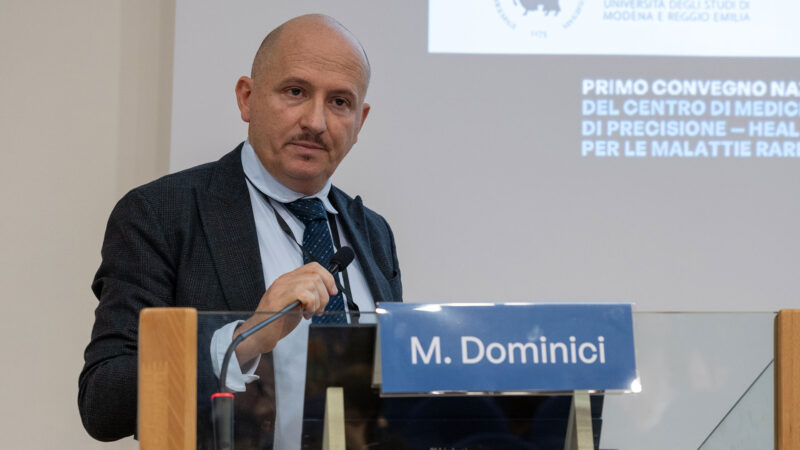
Dominici began by clarifying an important distinction: while rare diseases in general have a prevalence of fewer than 5 cases per 10,000 people, in oncology a different criterion is used. “We speak of rare tumours when the incidence is below 6 cases per 100,000 inhabitants,” he explained. “We speak of rare tumours when the incidence is below 6 cases per 100,000 inhabitants,” he explained.
This difference reflects the peculiarity of oncology, where prevalence (the number of people living with the disease) depends on the ratio between incidence (new cases) and mortality. A very aggressive and rapidly fatal tumour may have low prevalence even if incidence is relatively high, because patients do not survive for long.
Prof. Dominici drew an evocative parallel: “In these days we have heard about ‘rare earths’ as precious resources, and I think the same applies to these conditions, which represent an important challenge.” Just as rare earths are chemical elements precious to modern technologies, rare tumours represent unique scientific opportunities for understanding fundamental biological mechanisms.
The challenges of rare tumours
The problems in managing rare tumours are not very different from those of rare diseases in general:
- Lack of information — The scientific literature is scarce, case series limited
- Complicated diagnosis — Often requires specialist anatomopathological expertise
- Scarce reference centres — Not all hospitals have experience with these conditions
- Poorly understood scientific basis — The molecular mechanisms are often little understood
- Absence of effective therapies — Approved and validated treatments are lacking
A larger problem than one might think
Contrary to what one might expect, rare tumours are by no means marginal from an epidemiological standpoint. As Dominici highlighted, citing data from the European network Rare Cancer Europe, “of approximately two and a half million new cancer cases, one in five is a rare tumour.”
In Europe there are approximately 16 million oncological patients, of whom 4 million are affected by rare forms. These are therefore not negligible niches, but a significant proportion of the oncological population.
Prognosis: a worrying gap
A particularly telling figure concerns survival. “Look at the five-year survival data: the average survival for frequent tumours is 65%, for rare ones it is much lower. One patient in two, at five years, is no longer alive,” emphasised Dominici.
This survival gap between common and rare tumours reflects several factors: often late diagnosis due to lack of awareness, absence of organised screening, lack of validated therapeutic protocols, and difficulty in conducting clinical trials on limited numbers of patients.
Ewing sarcoma: an enemy of the young
Among rare tumours, Dominici focused on Ewing sarcoma — “a rare, aggressive tumour that primarily affects young people. It is the second cause of tumours in young adults.” With an incidence of only 4 cases per million inhabitants, it is truly rare, but its aggressiveness and the fact that it predominantly affects adolescents and young adults make it particularly devastating.
A quarter of patients already present with metastases at the time of diagnosis, and survival is very low. Beyond conventional chemotherapy — which has limited efficacy — no effective approved treatments exist. It is precisely for conditions like this that innovative approaches are needed.
Two innovative strategies
The research group of Prof. Dominici is working on two complementary strategies:
- Modified stromal cells — Mesenchymal stem cells are genetically engineered to produce antitumour molecules, such as the TRAIL protein (TNF-Related Apoptosis-Inducing Ligand), which induces programmed cell death in tumour cells. These modified cells are inserted into the tumour tissue where they continuously release the therapeutic protein.
- CAR-T lymphocytes — T lymphocytes from the patient are collected, genetically modified in the laboratory to express a chimeric receptor (CAR — Chimeric Antigen Receptor) that specifically recognises tumour cells, expanded in culture and reinfused into the patient. Once in the body, these engineered lymphocytes seek out and destroy tumour cells expressing the target antigen.
GD2: the molecular target
A key element of the work on Ewing sarcoma is the identification of the antigen GD2 (ganglioside D2) on the surface of tumour cells. “We verified that many tumour cells express an antigen called GD2. We therefore constructed CAR lymphocytes directed against GD2,” explained Dominici.
GD2 is a molecule normally present during embryonic development but scarcely expressed in normal adult tissues, making it an ideal therapeutic target: anti-GD2 CAR-T cells should selectively attack tumour cells while sparing healthy tissues.
Promising results in vitro and in vivo
The results obtained are encouraging. In vitro, anti-GD2 CAR-T lymphocytes are able to effectively destroy Ewing sarcoma cells. But the real test is validation in animal models.
“We then validated the model in vivo: of 8 mice with tumours, 6 were treated with CAR-T infusion, with a statistically significant response,” reported Dominici. A response rate of 75% in a preclinical model is a very promising result that justifies further development towards clinical studies.
Melanoma as a model
The group also works on melanoma, which “is not a rare tumour, but is an excellent model.” Melanoma has the advantage of being relatively frequent, which facilitates the acquisition of samples and the conduct of studies. Furthermore, it also expresses GD2, allowing the same CAR-T approach to be tested.
Melanoma cell lines were isolated from patients, GD2 expression was verified, and the same CAR-T approach tested on Ewing sarcoma was applied. “We showed that CAR lymphocytes are able to penetrate the tumour mass and destroy it in vitro,” reported Dominici.
Tests with autologous cells: overcoming an important concern
A particularly relevant aspect concerns tests in co-culture with patient cells and autologous lymphocytes (from the same patient). Many oncological patients have been treated with chemotherapy, which can damage the immune system. There was therefore concern that their lymphocytes — even if engineered — might not function adequately.
“We also conducted tests in co-culture with patient cells and autologous lymphocytes: the results were excellent. Within 24 hours, the tumour cells had practically disappeared,” announced Dominici. This means that “even patients treated with chemotherapy can have effective lymphocytes, if correctly engineered.”
This discovery is clinically important because many patients with rare tumours arrive at CAR-T therapy having already received chemotherapy, and it demonstrates that their immune system can still be exploited effectively.
Specificity as a safety principle
A fundamental aspect of CAR-T therapies is specificity. “It is a precision approach: if the receptor is not present, there is no activation,” emphasised Dominici. CAR-T lymphocytes are activated only when they recognise the specific antigen (in this case GD2) on the surface of cells.
This specific recognition mechanism should minimise side effects on normal tissues — one of the main problems of conventional oncological therapies such as chemotherapy, which indiscriminately targets all rapidly dividing cells.
Naturally, CAR-T therapies are not without risks: cytokine release syndrome and neurotoxicity are potentially serious complications. But the specificity of antigen recognition at least reduces the risk of direct damage to normal tissues.
From rare diseases to general paradigms
In the concluding part of his presentation, Dominici emphasised an important principle: “Research in rare diseases is fundamental. First, because what we learn there can also be transferred to non-rare diseases.”
This is a lesson that emerged repeatedly during the conference: studying rare diseases is not only a duty towards affected patients, but also a powerful scientific strategy. Rare diseases often reveal fundamental biological mechanisms in pure form, unclouded by other factors. Once these mechanisms are understood, they can be applied to more common diseases as well.
“Second, because rare oncological diseases are an extraordinary testing ground for developing new therapeutic paradigms,” he added. Rare tumours — precisely because they often lack therapeutic alternatives — represent opportunities to test innovative approaches that could subsequently be applied to other conditions as well.
The role of HEAL ITALIA
Dominici explicitly acknowledged the value of the HEAL ITALIA programme: “The HEAL ITALIA consortium is a fundamental training ground for this type of research. Sharing and multidisciplinarity are the key.”
Advanced cell therapies such as CAR-T require very different competencies: molecular biologists for genetic engineering, immunologists to understand immune responses, clinical oncologists for patient management, biomanufacturing experts for the production of engineered cells, and biostatisticians for study design.
A consortium such as HEAL ITALIA — bringing together universities, IRCCS, research institutions and companies — provides exactly the ecosystem needed for this type of complex and multidisciplinary research.
A team effort
The presentation concluded with acknowledgement of the research group. “This is our CAR-T group, with many young researchers without whom I would not be here today telling you all of this,” said Dominici, showing a photograph of the team.
This recognition of collective work is important. Modern biomedical research is intrinsically collaborative. No single researcher — however brilliant — can alone cover all the competencies required. It is teams, with their diversity of skills and perspectives, that produce the most innovative results.
Towards the clinic: remaining challenges
Although not explicitly discussed in the presentation, several challenges remain before these approaches can become routine clinical therapies for rare tumours:
- Clinical validation — Preclinical results must be confirmed in human clinical trials, with evaluation of safety and efficacy.
- Production — CAR-T cells must be produced for each individual patient under Good Manufacturing Practice (GMP) conditions — a complex and costly process.
- Management of side effects — The complications of CAR-T therapies require specialist expertise and appropriate facilities.
- Costs — Current approved CAR-T therapies have costs in the order of hundreds of thousands of euros per patient, posing sustainability challenges.
- Resistance — As with all oncological treatments, resistance can develop through loss of the target antigen or other mechanisms.
A promising future
Despite these challenges, Prof. Dominici’s presentation conveyed a message of grounded hope. Cell therapies — and CAR-T in particular — represent a radically new approach to oncology, based not on chemical molecules but on living cells engineered to combat the tumour.
For patients with rare tumours such as Ewing sarcoma, who currently have very few therapeutic options, these technologies could represent a breakthrough. The fact that the preclinical results are so promising justifies cautious optimism.
The integration of this research within the context of HEAL ITALIA — with its Precision Medicine Centers, biobanks and integrated competencies — should accelerate the pathway from basic research to clinical practice. As emphasised by several speakers during the conference, Precision Medicine for rare diseases requires exactly this type of integrated and collaborative approach.
Dominici’s final message is clear: rare tumours, while representing difficult clinical challenges, also constitute unique scientific opportunities. Investing in their research benefits not only the patients affected by these conditions, but advances the whole of oncology — developing therapeutic paradigms that can be applied more broadly. And in this journey, sharing, multidisciplinarity and collaboration are the keys to success.