
Men and women get ill differently: here is why medicine needs to change
Professor Ortona, when we talk about Precision Medicine, who exactly is it for?
The target is each one of us — every person with their own differences, their own particularities, their own peculiarities. A medicine that is not centred on the disease, but on the person. Every person is different, so Precision Medicine must go precisely to the heart of the differences between one person and another in order to give everyone the best possible care.
And what does it mean for researchers, for the healthcare system, for students studying medicine?
We certainly need to recognise differences. To try to study not only from a genetic standpoint but also from the perspective of the individual as a person living in an environment, with a sociocultural level and a profession. Everything that surrounds this person has an influence on their state of health.
So not only the aspects linked to one’s own body and organism — the genetic or phenotypic aspects of each of us — but also aspects more connected to lifestyles and the environment that characterise us and make each of us a different person. Going to study and understand through research what these differences are leads us towards Precision Medicine — therefore more appropriate and also more equitable.
What are the main expectations but also the fears and concerns about Precision Medicine?
Certainly one assumption is that it is a much more costly form of medicine, requiring much greater spending to arrive at the right treatment for each individual. But one must also consider that, once this is achieved, there will surely be significant savings for the healthcare system as well.
Because there will certainly be fewer hospitalisations due to incorrect treatments, ineffective therapies, or adverse effects from drugs that perhaps were not designed for that particular organism, for that person at that particular moment in their life. So Precision Medicine could truly be not only more equitable but also more sustainable and more economical.
Let us talk about the HEAL Italia project. From your perspective, what are the objectives?
From my point of view it is an initiative that genuinely has the objective of creating a network — a network of collaborations between different institutions, located primarily in the south of Italy — that share a common objective: precisely to develop a medicine, to develop innovative methods to create a more equitable and more sustainable medicine by placing the person at the centre of care.
With very advanced methodologies based on artificial intelligence and big data, the objective is to identify more appropriate care by placing sex and gender differences at the centre. Because the HEAL Italia project has specifically chosen to give space to gender medicine as a first step towards what is Precision Medicine.
Can you explain this connection between gender medicine and Precision Medicine more clearly?
Without gender medicine, Precision Medicine cannot be achieved, because the first differences are those linked to sex and gender. The focus has been placed above all on metabolic diseases and tumour diseases, particularly hormone-dependent ones. I think of melanoma, for example, which is a disease that presents important differences — both in terms of diagnosis and prognosis, but also in terms of response to treatments — between men and women.
Simply identifying and understanding these differences is a truly important step towards Precision Medicine.
Why did you choose to embrace the HEAL Italia project? What were your deepest motivations?
I found genuine interest and great enthusiasm, and great competence among the groups that decided to participate in this project, in this challenge of bringing our expertise to bear on a common objective. People, researchers, doctors, clinicians with different areas of expertise and different professional backgrounds all commit to working together towards a shared goal: making medicine a Precision Medicine, an attentive medicine.
Let us leap forward: Precision Medicine has become routine. What might a typical patient’s day look like?
I imagine there being attention to the person — the possibility of having a more trusting relationship with one’s doctors. A doctor-patient communication that goes beyond what we are used to, one that can go deeper into the needs and necessities of the person. At that moment they are a patient but they are still a person with their own characteristics and peculiarities, so that the best solution to their problems — obviously physical ones — can be found together.
I believe the typical patient’s day could be one of having a faster and more effective solution to their problems, and therefore a significantly better state of health.
Will access to hospitals and various facilities also be easier and less costly for the healthcare system?
Absolutely, because directly a faster diagnosis will be possible. By knowing the person in their entirety — in their health needs, in their necessities, in their peculiarities — a faster diagnosis will be arrived at, which also leads to faster treatment and therefore more effective care. And this certainly also leads to savings for the healthcare system.
What will be the most important professional figures or competencies in the future for Precision Medicine?
I believe that each professional will continue to do their own work, but within a team-oriented framework. That is, multiple competencies will be brought together to assess and provide the patient, the person, with all the answers they need at that moment.
The important thing in my view is to reflect on the importance of working as a team, of coming together so that everyone can contribute — each with their own professional expertise — and give the patient the answers they need at that moment, for their health but also at that particular moment in their life.
How would your profession change if Precision Medicine became widespread?
I believe that if Precision Medicine were to become truly widespread, there would no longer be any need to talk about gender medicine. I work on gender medicine and I believe it will become medicine itself, in the event that Precision Medicine can spread.
Because attention to differences — sex and gender differences but also differences of ethnicity, culture, environment, all the differences that characterise us — will enter medicine itself, into the very concept of medicine. In this way we will be able to work, to return to work knowing that gender medicine and Precision Medicine have entered schools, universities and clinical practice. So there will no longer be a need to talk about them separately, because they will be the same medicine.
A message to the new generations of doctors and researchers?
I want to say that it is right to specialise in a single subject, a single field, but one must also have a holistic vision of the patient. To recognise that the patient is a person at that moment who has specific needs that must be understood, must be grasped. And Precision Medicine can certainly achieve this objective.
So it is right to have a specialisation because increasingly more and more specific areas of specialisation are sought in order to become truly expert in a given field. But one must not forget that the doctor must still be a doctor in the full sense of the word — they must be capable of understanding the person.
Let us talk more in depth about gender medicine. As a fundamental element of Precision Medicine, what do you want to say to our readers?
Gender medicine is precisely an approach to medical practice that takes into account sex differences — the biological aspects that distinguish male from female — but also considers aspects related to gender: social, cultural and environmental aspects linked to lifestyles.
Today there is so much talk of One Health, precisely because it is not only the person but also the environment in which one lives, everything that surrounds us, that influences our state of health and consequently our diseases. Because there are important differences between men and women in terms of the incidence, progression, clinical manifestations and response to treatments of diseases, right through to prognosis.
Can you give us some concrete examples?
These differences are influenced by biological aspects such as genetic, epigenetic and hormonal factors, factors related to the microbiome, but also factors more linked to gender — lifestyles and the environment in which one lives. Let us think about lifestyle factors such as diet, physical activity, smoking and alcohol. These are all factors that differ between men and women. Consider: smoking and alcohol are still today more common habits among men, but women have fewer protective factors. So for the same dose of both nicotine and alcohol consumed, women experience worse effects.
Or diet: women are generally more attentive, have a more balanced diet, eat more healthily than men, but engage in far less physical activity. Men, on the other hand, often engage in physical activity that is even excessive. So these are all differences that must be taken into account.
And with regard to hormones?
Sex hormones do not act only on the reproductive systems but on all our cells. All our organs and tissues express receptors for these hormones, so sex hormones can act on the functions of all our organs. And this helps us understand how there are very important differences between men and women.
We can give very simple, straightforward examples. Let us think, for example, about cardiovascular diseases, which are considered the preserve of the male sex. In fact they are the leading cause of death for women, and this is often not known, often not taken into account. But women themselves do not take it into account — they often do not recognise the symptoms of a heart attack, because they do not think they could be having one. But even the doctor themselves sometimes has difficulty making a diagnosis of heart attack in a woman, also because a heart attack often manifests differently in a woman than in a man.
Can you explain that more clearly?
Instead of the classic left arm pain, women often experience more subtle symptoms: excessive fatigue, jaw pain, symptoms that do not immediately suggest a heart attack is beginning. And this obviously causes a delayed diagnosis, and therefore less effective treatment, and therefore a significantly higher mortality rate in the female sex for this reason as well.
And for osteoporosis?
Then there are many other examples. Osteoporosis, which is certainly a disease considered on the contrary to be the exclusive preserve of women. Yet in Italy, for example, 4 million women are affected but also one million men are affected by osteoporosis.
Men do not go for prevention, they do not have a bone density scan. And even if they did, the parameters established in medical studies were calibrated on a female organism, not a male one.
However, when men suffer fractures, they face death far more often. For example, men die more often than women from hip fractures. This is a difference that is instead a disadvantage for the male sex.
Over all these years, have there been any preconceptions you would like to dispel, and perhaps some taboos?
There has been a tendency — even now — for gender medicine not to be recognised as a medicine of differences, but to be thought of as the medicine of women, almost as a feminist endeavour within medical practice, a medicine by women. A group of women wanting to advance women’s medicine. Instead it is not that, as I have explained. Often medicine can also be a disadvantage for men, as I said earlier about osteoporosis.
Some people also think that gender medicine is the medicine of the LGBT population. And again: gender medicine is the medicine of differences. So certainly transgender people and intersex people are individuals who must access the healthcare system and therefore have their own needs and peculiarities that must nonetheless be understood. Because if you do not know, you cannot then address a situation.
So yes, there are certainly prejudices. We need to work hard to provide a great deal of training and a great deal of information to the public as well, because only in this way will every person — aware of their own health needs that also arise from sex and gender differences — be able to demand care designed around their own person.
What does it mean in concrete terms to be aware of these differences in clinical practice?
Precisely in medical practice too, these differences must be known. Because only by knowing them — through training, through continuing professional development, through the education of students but also the updating of healthcare professionals — will it be possible to incorporate gender medicine into clinical pathways, in order to achieve an ever more appropriate medicine.
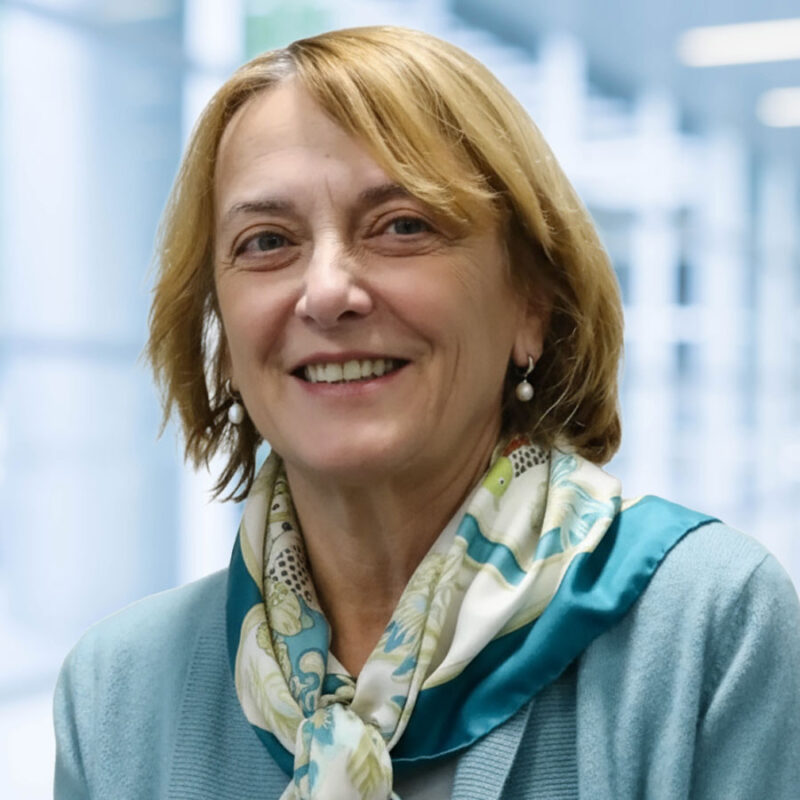
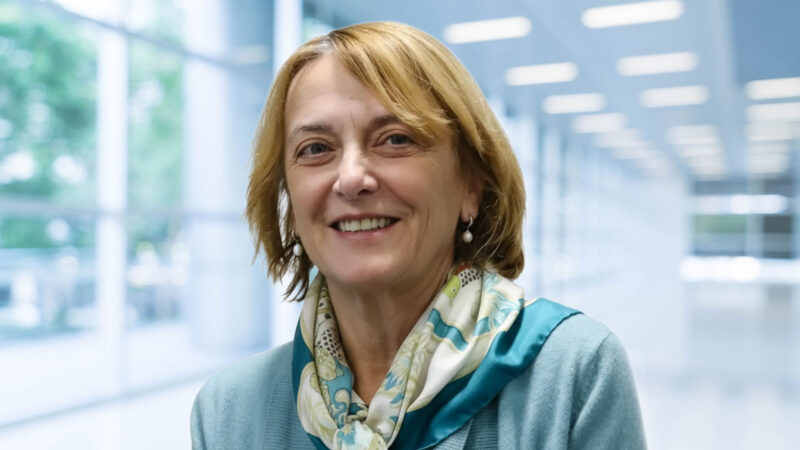
Prof. Ortona actively participates in the HEAL Italia project, coordinating a vast national network of collaborations between scientific societies, universities and research centres. Her Gender Medicine Reference Centre at the Istituto Superiore di Sanità represents a fundamental point of reference for bringing attention to sex and gender differences across all medical specialties, demonstrating how this is the first indispensable step towards a true Precision Medicine for everyone.