
Overcoming nonsense mutations: new molecules for 10% of rare diseases
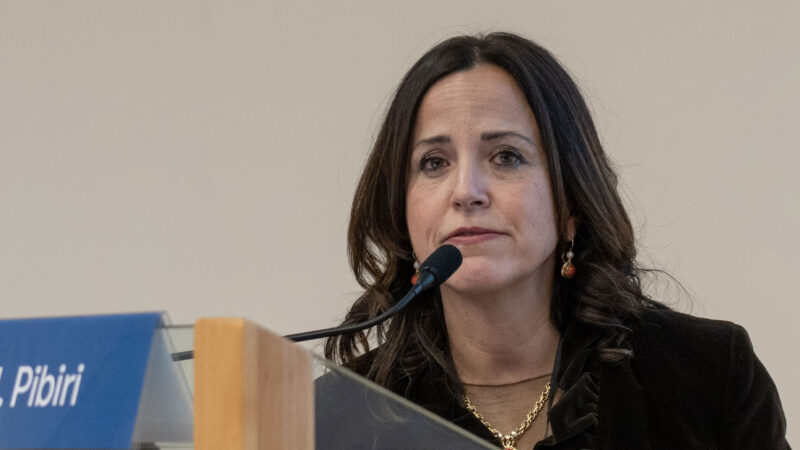
The professors began by recalling the fundamentals of molecular biology — particularly useful given the presence of many students in the audience. Protein synthesis proceeds through the reading of the genetic code: each triplet of nitrogenous bases (codon) in the DNA corresponds to a particular amino acid that is inserted into the protein chain under construction.
The end of synthesis is determined by one of three stop codons: UAA, UAG or UGA. When the synthesis mechanism encounters one of these codons, protein production halts and a full-length, functional protein is released.
Nonsense mutations: when the stop comes too soon
Nonsense mutations are point mutations that convert a codon for an amino acid into a premature stop codon. It is as if a full stop were placed in the middle of a sentence: “The patient has a mutation.” instead of “The patient has a nonsense mutation that causes the disease.”
This premature interruption of synthesis results in the production of a truncated, incomplete protein. In most cases, these incomplete proteins are not functional and are rapidly degraded by the cell. The final result is the absence or severe deficiency of the normal protein, causing the disease.
A defect common to many rare diseases
Nonsense mutations are responsible for a wide variety of genetic conditions. The professors cited several examples:
- Cystic fibrosis
- Duchenne muscular dystrophy
- Choroideraemia (a form of hereditary blindness)
- Primary immunodeficiencies
- And many others
The statistic is impressive: approximately 10% of rare diseases are caused by nonsense mutations. This means that potentially tens of thousands of patients worldwide could benefit from a drug capable of correcting this particular type of genetic defect.
TRIDs: drugs that “read through” the stop
The therapeutic approach for these mutations is based on a class of drugs called TRIDs (Translational Readthrough Inducing Drugs) — literally “drugs that induce readthrough of translation.” These compounds allow the protein synthesis mechanism to “skip” the premature stop codon and continue synthesis until it reaches the true stop codon at the end of the gene.
As the professors explained, “these drugs can theoretically act on many rare diseases caused by this specific mutation, regardless of the disease itself. The therapeutic precision is not oriented towards the condition, but towards the common genetic defect.”
This is a revolutionary aspect: instead of having to develop a different drug for each disease, a single TRID could potentially treat hundreds of different rare diseases, all sharing the presence of a nonsense mutation. “The potential impact is enormous,” they emphasised.
Ataluren: a success followed by a setback
Until recently, the only TRID molecule to reach the market was ataluren (brand name Translarna), approved for Duchenne muscular dystrophy with a nonsense mutation. However, the professors delivered concerning news: “The conditional EMA authorisation has been suspended: so currently no drug is available for these patients. There is an enormous therapeutic void.”
The suspension of ataluren’s authorisation — likely due to clinical trial efficacy data that were not entirely convincing — has left thousands of patients without therapeutic alternatives. It is in this context that the work of Prof. Pibiri and Prof. Lentini takes on its significance.
An integrated approach: chemistry and genetics together
The project represents a perfect example of interdisciplinary research. “I am an organic chemist, my colleague is a geneticist: together we develop an integrated approach,” explained Prof. Pibiri.
This collaboration makes it possible to cover all the necessary phases: the chemist designs and synthesises the new molecules, the geneticist tests them on cellular models and evaluates the recovery of protein expression. The results of these tests then guide modification of the chemical structure in an iterative optimisation process.
From the pharmacophore model to three lead molecules
The group began by starting from the structure of ataluren, using it as a starting point for designing molecular variations. They synthesised numerous compounds and tested them on different models: first on reporter systems (artificial genetic constructs that allow easy measurement of activity), then on cellular models of specific diseases.
“The process is iterative: the results guide modification of the pharmacophore model,” they explained. Through successive cycles of design, synthesis and testing, they identified three particularly promising molecules: NV848, NV914 and NV930.
Tests on cystic fibrosis: from the cellular model to the mouse
Cystic fibrosis is a multi-organ disease affecting primarily the lungs, caused by mutations in the CFTR gene — which codes for a chloride channel essential for the correct functioning of epithelial cells. Approximately 10% of patients with cystic fibrosis have a nonsense mutation in the CFTR gene.
In cellular models with nonsense mutations, the new molecules demonstrated recovery of CFTR protein production, as evidenced by immunofluorescence (a technique that allows visualisation of where the protein is located within the cell) and western blot (a technique that quantifies the amount of protein present).
But the most significant result came from in vivo tests on mice with a nonsense mutation in the CFTR gene. “We tested the molecule NV848 on mice with a nonsense mutation, observing recovery of protein expression in the lungs, both by western blot and immunohistochemistry,” they reported.
The fact that the molecule works not only in isolated cells in a test tube, but also in a whole organism, is a crucial step towards clinical development. These results led to the patenting of the molecules and the granting of the patent to an American company for further development.
Primary immunodeficiency: efficacy on patient cells
The second example concerns a primary immunodeficiency caused by mutations in the LRBA gene. A patient with this condition had been treated with compassionate use of ataluren and had shown clinical benefits, demonstrating that the TRID approach could work in this disease as well.
The professors obtained primary cells from this patient and tested them with their new molecules. “We observed recovery of the LRBA protein, both by western blot and immunofluorescence. Our compounds showed superior efficacy to ataluren,” they reported.
This is a particularly significant result: not only do the new molecules work, but they appear to work better than the reference drug ataluren. Furthermore, the fact of testing the molecules on cells from real patients (not only on laboratory cell lines) increases the clinical relevance of the results.
Duchenne muscular dystrophy: improvement of muscle strength
Duchenne muscular dystrophy is a serious genetic disease that causes progressive degeneration of the muscles, leading to disability and premature death. It is caused by mutations in the gene coding for dystrophin — a protein essential for the structure and function of muscle fibres.
Mdx mice are an animal model of this disease, carrying a nonsense mutation in the dystrophin gene. “Treated with NV848 for 15 days, we observed an improvement in muscle strength (grip test) and a partial recovery of dystrophin, demonstrated by immunohistochemistry,” the professors reported.
The grip test measures the strength with which a mouse is able to cling to a grid: it is a functional parameter that directly reflects muscle health. The fact that treatment with NV848 improves this parameter suggests that dystrophin recovery is not only measurable biochemically, but has concrete functional effects.
New chemical scaffolds and oncological applications
The work did not stop at the initial three molecules. “We then continued to develop new chemical scaffolds, using all the data obtained to refine the pharmacophore model. These new compounds also show promising activity,” they explained.
A chemical scaffold is the basic molecular structure on which modifications are made. Exploring different scaffolds makes it possible to identify families of compounds with optimised properties: greater efficacy, better pharmacokinetics (how the drug is distributed in the body), fewer side effects.
Particularly interesting is the mention of oncological applications: “We are now working on proteins such as p53.” The protein p53 is one of the most important tumour suppressors: many tumours carry mutations in p53 that abolish its function. If some of these mutations were nonsense mutations, TRIDs could potentially restore p53 function, providing a new therapeutic approach in oncology.
The potential impact: 30 million patients
The professors emphasised the scale of the potential impact: “It is estimated that approximately 30 million patients could benefit.” This figure derives from the sum of all patients worldwide affected by diseases caused by nonsense mutations.
Obviously, for this potential to be realised, the molecules must still pass through the preclinical and clinical development phases, obtain regulatory approvals, and become available to patients. But the fact that a single therapeutic approach could potentially benefit tens of millions of patients with different diseases demonstrates the power of Precision Medicine when it is oriented towards the molecular defect rather than the clinical syndrome.
Three validations, one common principle
The professors summarised the results obtained: “We have validated TRIDs in three conditions: cystic fibrosis (CFTR), immunodeficiency (LRBA) and Duchenne muscular dystrophy (dystrophin).”
These three diseases are very different from a clinical standpoint: one affects primarily the lungs, one the immune system, one the muscles. But they share the fact of being causable by nonsense mutations. The fact that the same TRID molecules work in all three conditions demonstrates the fundamental principle: the drug acts on the common genetic defect, not on the specific disease.
This approach has important implications for clinical development. Instead of having to conduct separate clinical studies for each individual rare disease (often impossible due to insufficient patients), it might be possible to group patients with different diseases all caused by nonsense mutations, accelerating development and increasing the statistical power of the studies.
The role of HEAL ITALIA
The presentation concluded with thanks to the working group, collaborators, students, and specific acknowledgement to HEAL ITALIA and Prof. Moroncini. This project is part of Spoke 5 of HEAL ITALIA, dedicated to the identification of new therapeutic pathways.
The support of a programme such as HEAL ITALIA was probably crucial for this type of research. The development of new drugs requires significant and continuous investments, multidisciplinary competencies (chemistry, genetics, animal models), access to sophisticated technologies, and often collaborations with industrial partners for the more advanced stages of development.
From basic research to clinical hope
The work of Prof. Pibiri and Prof. Lentini represents a virtuous example of how basic research can translate into concrete potential clinical applications. Starting from understanding the molecular mechanism of nonsense mutations, they rationally designed new molecules, tested them systematically on increasingly complex models (from cells in test tubes to mice), obtained patent protection, and initiated collaborations with industry for further development.
This is exactly the type of translational research pathway that Precision Medicine requires: from understanding the molecular mechanism to the rational design of targeted therapeutic interventions.
For patients with diseases caused by nonsense mutations — currently without effective therapies following the withdrawal of ataluren — this work represents a concrete hope. The molecules will still need to complete the preclinical development phases (toxicology testing, pharmacokinetics, formulation) and then human clinical studies — a pathway that will require years. But the results obtained so far are promising enough to justify cautious optimism.
As emphasised repeatedly during the conference, Precision Medicine for rare diseases is not only a duty towards affected patients, but also a strategy for developing innovative therapeutic paradigms applicable more broadly. Nonsense mutations do not only cause rare diseases: they are also present in some tumours, in some forms of neurodegenerative diseases, and in other conditions. The TRIDs developed for rare diseases could therefore have much broader applications, potentially benefiting millions of patients worldwide.