
Officine for Precision Medicine: where research becomes care
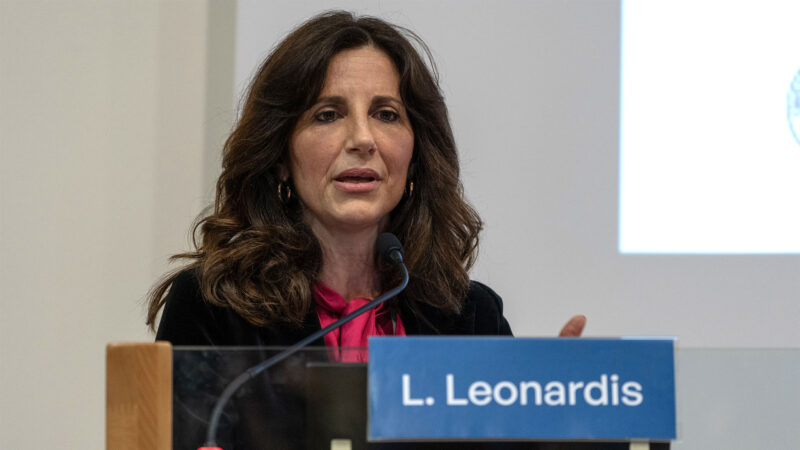
Dr. Leonardis, let’s start from the beginning. What is HEAL Italia and what is its mission?
The HEAL Italia Foundation was established thanks to the PNRR, measure 4, component 2, from research to business. Whenever I am asked what the HEAL Italia Foundation does and where it comes from, I find it very natural to recall our origins and to thank the Italian government and the Ministry of Research for making our existence possible.
HEAL Italia represents Italy’s innovation hub for Precision Medicine. The objective is to prevent, delay and treat serious diseases by moving from a one-size-fits-all approach to personalised care. Through the involvement of the best researchers, the promotion of innovation and the valorisation of global collaboration, HEAL Italia aims to achieve targeted and timely therapies with the goal of significantly improving care pathway outcomes.
Our mission is to focus on precision healthcare, moving towards a proactive and personalised healthcare system. We work with specific areas of interest: primarily in oncology, tumours, rare, metabolic and cardiovascular diseases. We have a very solid and integrated approach that concerns prediction — that is, being able to predict and therefore get ahead of the disease.
What is HEAL Italia’s true strength?
Our core values are collaboration, the network of excellence, the opportunity to nurture young talent, and global openness. But our true strength is our network.
Working together across different parts of Italy, making Italy one great laboratory that knows no territorial boundaries. For the first time, we are applying a digital working logic that allows these laboratories to be connected in a network, sometimes making us forget the existence of walls and therefore of physical place.
HEAL Italia can be described as a great research laboratory that unites the physical and virtual dimensions, where talented minds, professionals, young people, women, and even retired professors who continue to work with us, all work together with diverse competencies through the integration of interdisciplinarity: doctors who engage every day with physicists, mathematicians, clinicians, experts in 4.0 technologies — all to build an integrated value chain in support of the fight against disease.
What are Officine for Precision Medicine and why do they represent such an important evolution?
The Officine are the natural evolution of HEAL Italia’s entire research programme, which has seen more than six hundred people collaborate over three years.
It is the place where this personalised Precision Medicine becomes a true laboratory, a workshop where the business world and those with the ambition to develop cutting-edge technology to support healthcare can find a place to be supported.
Our mission is to be able to make a contribution towards a turning point in the approach to health: no longer a single solution for everyone, but targeted interventions based on biological, genetic and environmental characteristics. A great shift in perspective, a great paradigm shift.
Officine for Precision Medicine was born from the desire to create in Italy this physical and virtual space in which to develop accredited and standardised programmes for the creation of health services centred on the application of these personalised, predictive and precision medicine approaches. Services that make it possible to deliver, in daily clinical practice, personalised medical treatments based on the patient’s physiological characteristics — not only genetic ones, but everything relating to the patient’s life, lifestyle and history.
The Officine are this place where research, business and technology come together in an articulated system of services that, especially within hospitals, enable the transfer of knowledge, expertise and technologies, developing them together within the hospital itself.
How does all of this reach the patient? How do they experience it in their daily life?
The objective is to help our Italian healthcare system to have, within the hospital itself, an already established aggregate — not having to seek out many different competencies in many different places, or many different technologies, but to concentrate the entire value chain that HEAL Italia has developed.
Let us remember: we were born from a major project that placed eight thematic networks in a value chain, uniting omic sciences, predictive models, gene therapies and innovative therapies. This entire chain — advanced diagnostics, research in innovative fields — is impossible to find in a single hospital, impossible to find in a single university.
But if we place in a chain the data networks already generated by these networks and focus them on specific topics, on specific pathologies, and create networks so that these pathologies can be addressed from every angle and not just from the perspective of the individual, then we create a workshop, a laboratory, a true workshop within the hospital where everyone can bring a piece, a very broad toolbox, and each contribute our own tool to work together in the same direction.
But does this also mean rethinking how hospitals are organised, not just adding technologies?
Exactly. Imagine a hospital in which the management side, the organisational side — the one that almost never comes up when we talk about research and innovation — becomes central. We always look at basic research and innovation, but we forget that the home of all of this is always a management and organisational system.
If it is not geared towards pushing, facilitating and also drawing from what innovations are capable of generating, an institution will never be able to function in unison with the pace and drive that innovation requires.
Today there are very practical examples: we have hospitals where this is standard practice and where everyone knows what artificial intelligence is, what the advantage of an AI system linked to diagnostics is, or the possibility of developing medicines through in silico approaches. But if we look at other hospitals, they might say: “Look, at the moment we don’t have the electronic health record, at the moment we don’t have this innovation, at the moment we have to run because with what we have we need to try to respond as best we can to patients’ needs.”
We certainly do not want to be the panacea for all ills, nor do we position ourselves as the solution to these ills, but we position ourselves as the opportunity to experiment with a new management and organisational model that is born, grows and is forged together with the processes of innovation and research. This is precisely the element that is missing every time we talk about research projects, even at this level.
What is the concrete impact on the healthcare system? Let’s take a practical example.
I’ll give a concrete example: the national campaign on BRCA genetic testing for the prevention of breast and ovarian cancer.
If science already gives us clear and recognised evidence — that it is beneficial for any Italian woman to be able to know whether she carries BRCA mutations, which are predictive of a higher probability of developing an oncological disease — then we must act.
With all the protocols that exist and all the methods that are now in place in many hospitals, these methods are not in place in all hospitals. Today we have populations that are aware of the benefit of accessing genetic counselling services, but not all women today know that this type of test exists.
The first people we need to raise awareness among are precisely those women who are part of the so-called general population — not those who already know about these topics. This is one of our objectives: as a foundation we are committed to launching a national awareness campaign that will focus on a series of activities, including the possibility of carrying out genetic tests on a sample population of women who have not already been identified as at-risk.
How will this campaign work in practice?
We have networked over one hundred molecular biology laboratories. With research funds we are promoting these free tests for a defined number of women. We will open this campaign in December and keep it open for at least a couple of months. We will fund these tests with research funds, therefore not with healthcare funds.
We will certainly support the healthcare impact because the database that will emerge from these tests will give the Regions the ability to know that in that Region there is a map, a specific risk that may have remained hidden. Despite the existence of PDTAs and accredited centres, not all women today know that this type of test exists.
This contributes to that awareness and knowledge that can perhaps do the most important thing: empower citizens to take responsibility for their own health with tools that can also be life-saving.
Beyond BRCA testing, what other concrete Officine initiatives will you announce on 4 December?
Another very important initiative is that we are working on the creation of an Open Science Lab that will feature an immersive teaching approach to understanding DNA and the genome. It will be aimed at all schools and at citizens who are unfamiliar with these topics and wish to approach the importance of self-knowledge, including by discovering what DNA is and how important it and all its implications are.
All of these activities — science, research, laboratory spaces and training — fall within a very rich training catalogue. We will start with an academy on artificial intelligence, medicine and precision, also collaborating with many foreign countries.
The Officina for Precision Medicine is this workshop that contains within it all the tools, the integrated support services for healthcare organisations, for research — meaning universities and research institutions — but also for businesses, through dedicated packages, so that this circuit of collaboration can be created and so that hospitals in particular genuinely receive support that does not come from outside but from within, because we commit to collaborating from inside the hospitals, helping hospitals to conduct research and development.
I am speaking of hospitals that are not university teaching hospitals — meaning hospitals that do not have research as their core mission. Training, the possibility of helping all of our partnership, which is now immense — we have more than 80 partners — allows them to continue working on the research lines we have built together.
HEAL Italia also has an important international dimension. Can you tell us about it?
We have worked a great deal on international agreements and have undertaken several missions. The most important was the one we carried out in June of this year to the United States, where we established a great many relationships — not only with the US but also with various parts of the world.
We attended Bio International, this hugely important worldwide biotechnology fair for health. There we met various institutions, companies and universities based in Japan, China and Australia — not just American ones.
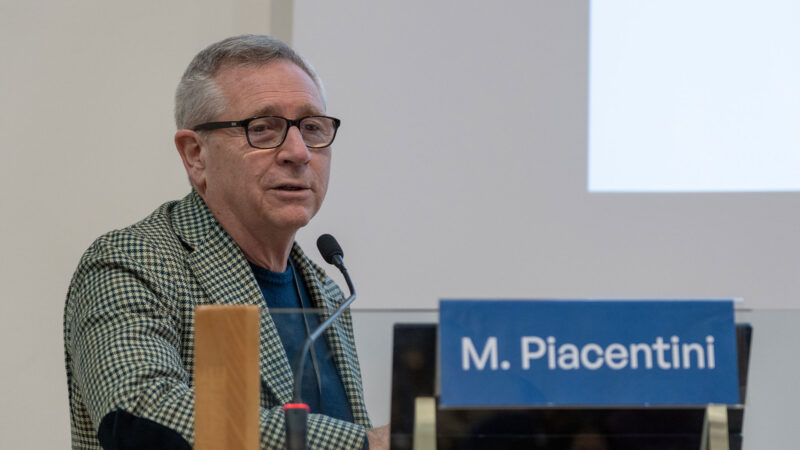
Also thanks to our advisory board and our Scientific Director Professor Piacentini, we have established a whole series of international contacts. We have now positioned ourselves as an Italian platform capable of building a bridge between HEAL Italia and the world: between HEAL Italia and the United States, between HEAL Italia and China, between HEAL Italia and Japan.
This is to ensure that our researchers, all the research ideas that have matured within the programme, all the patents and all the business ideas born within the HEAL Italia programme can have not only support in Italy, but also an already charted path in an international journey.
To our great delight, we have seen how HEAL Italia is perceived abroad. In the field of health technologies and business in that sector, HEAL Italia is very well regarded, and Europe is very well regarded. Our territory is one that attracts a great deal of interest and we have many collaboration proposals from very important institutions.
On 4 December you will officially present the Officine. What kind of day will it be?
For me it is a day of celebration. It is a chance to come together, to take stock, to look back a little at where we have arrived today and where we are heading, and what we still want to do together — with even more enthusiasm than three years ago.
The important element of 4 December is what it delivers to us: at the root of everything there are always people, human beings. The value of people has always been, and the enthusiasm of doing things together has always been, probably our greatest strength.
The willingness to choose one another and to keep choosing one another. There are many projects born from the PNRR, there are many foundations, each of our partner universities is simultaneously a partner in ten, twelve, thirteen other projects. In our own small way we have created a solid core, an ecosystem of people who have chosen and who continue to choose to commit here, to work here, because they enjoy working. That alone is already a great victory for us.
The 4th of December is the day that marks how we have truly gone out and bridged all those distances, and despite our starting point, we have nonetheless managed to deliver results and models. Above all, together we are now about to complete what we were born to do: work alongside and in support of the healthcare world.
What are the future objectives? The vision for the coming years?
My hope is that in Italy, together with all those working on similar topics, we can engage in dialogue, collaborate and form a single team — a true Italian squad — that allows HEAL Italia to compete in the world, to compete in Europe, and that gives HEAL Italia this additional edge in the fight against all chronic-degenerative diseases.
Because there is a growing trend of population ageing. There is a declining birth rate. This means that the older the population gets, the greater the likelihood of falling ill.
This cannot and must not be the concern of just a few. It must be everyone’s concern, everyone’s interest.
All those who, like us, have benefited from the enormously important financial instruments that the PNRR has made it possible to aggregate — in HEAL Italia we have brought together laboratories, platforms and technologies — if we could create a single platform with everything that each of us has aggregated, I think we could further motivate our young people not to leave, to stay here in these laboratories, all trying to do our part.
From now on we are doing this because we already collaborate with many centres like ours, with foundations, with everyone with whom we have connections. And even when we don’t have them, we probably discover that we do, because everything relating to environment, health and lifestyle is ultimately interconnected.
A final word on the Officine?
It is difficult because holding on is not easy. But the goal is more important than the effort, the difficulty, the hard work. The PNRR for HEAL Italia was a tsunami for which no one was ready, let’s be honest. But we cannot give up. Now we must all stand together and move forward.
Officine for Precision Medicine represent exactly this: the ability to transform a tsunami into an opportunity, to build something that endures, that grows, that concretely changes people’s lives. No longer a project that ends when the funding runs out, but a sustainable model that becomes an integral part of our healthcare system.
Officine for Precision Medicine represent the future of Italian healthcare: a physical and digital space where research, technology and care come together to transform the lives of patients. Where over 600 researchers, 80 partners and eight thematic networks work together to bring personalised medicine to all citizens. The 4th of December will be the occasion to discover together this extraordinary project that is changing the way we prevent and treat disease in Italy.