
Predictive Oncological Medicine in Head and Neck Tumours through Omic Analysis and Artificial Intelligence
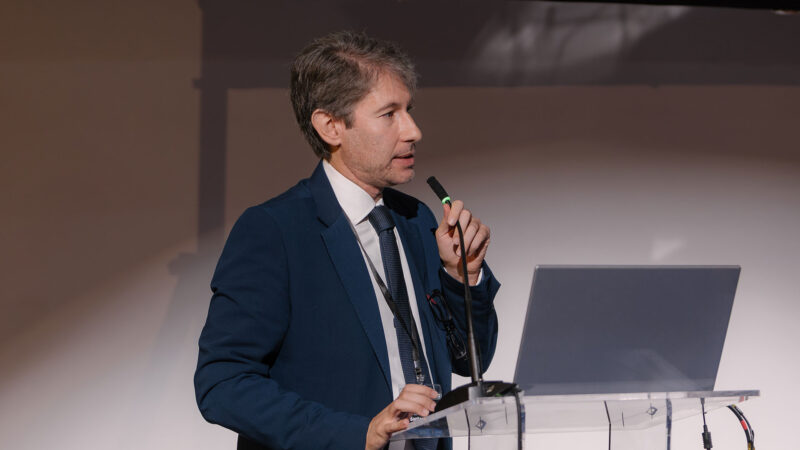
Prof. Andrea Santarelli opened his presentation by thanking Prof. Moroncini for the introduction. As he highlighted, the study is part of Work Package 1 and more precisely of TASK 1.4, aimed at developing a prognostic model and risk stratification for patients with squamous cell carcinoma of the oral cavity. This is a task dedicated specifically to head and neck tumours and in particular to oral cavity cancer.
This type of neoplasm would benefit particularly from the identification of prognostic biomarkers. As the speaker highlighted, mortality curves over time have remained substantially unchanged over the years, despite the improvements observed for other types of neoplasm. One of the main reasons for this stagnation is that new immunotherapeutic and biological drugs essentially lack specific molecular targets for oral cavity carcinoma, significantly limiting the available therapeutic strategies.
Current therapeutic options and their limitations
At present, the therapeutic gold standard lies in surgical therapy for localised stages, with associated lateral-cervical clearance of the lymph node stations of the neck. Alternatively, for stage 1, brachytherapy is used, or radiotherapy combined with surgical therapy in locally advanced stages.
In recent years, targeted therapies have also been developed, such as immunotherapy and biological drugs. However, as Santarelli emphasised, these innovative therapies for head and neck tumours are limited to a not particularly wide range of drugs. Furthermore, a significant problem has emerged: the molecular targets addressed by these drugs, while effective, do not always show overexpression that correlates with the patient’s prognosis.
The REMARK model and the problem of single markers
The approach towards Precision Medicine has well-defined steps. The REMARK model, introduced approximately ten years ago, is the reference standard in this field for the validation and identification of prognostic biomarkers.
What is observed in oral carcinoma is that over the years there has been a proliferation of studies identifying markers — but these are single markers that, if not incorporated into a well-defined prognostic model, subsequently find low translatability in the clinical setting. This represents one of the main problems in oncological research: the difficulty of transferring basic research results to everyday clinical practice.
Previous experience: from the methylation panel to the genetic test
In a recent study, the research group had been part of a team that had validated the use of a panel of multiple markers linked to DNA methylation in 13 genes altered in squamous cell carcinoma. This approach, through biostatistical analysis, also made it possible to bring to market a genetic test aimed precisely at the early diagnosis of squamous cell carcinoma.
The introduction of new computational models linked to artificial intelligence has made it possible to take a further step forward, bringing together multiple markers and multiple clinical data, and thereby analysing much larger datasets in a massive manner. However, not all of these approaches are immediately translatable to the clinical setting, primarily for reasons related to costs and operational efficiency.
The AJCC staging system and the importance of new parameters
At present, staging and stratification for oral cavity carcinoma follows the TNM system of the AJCC (American Joint Committee on Cancer). It has been demonstrated that with the introduction of new parameters from the seventh to the eighth edition, patient stratification has improved. The Ancona research group validated this observation in a specific study.
This improved stratification has repercussions on the allocation of patients to different categories, allowing them to benefit from more targeted therapy and therefore a better prognosis. Introducing new parameters that combine with existing ones to better stratify patients falls within the scope of Precision Medicine and has a significant impact on prognosis as well.
The philosophy of the study: from clinical routine to translational practice
The starting idea of TASK 1.4 was to identify new prognostic factors beginning from clinical routine — that is, from what is normally done in clinical practice and in the anatomopathological analysis of patients. This approach was chosen precisely in order to be translationally applicable to clinical-therapeutic reality as soon as possible.
A significant advantage for this study is the availability in Ancona of the largest Italian database of squamous cell carcinoma of the oral cavity cases — a fundamental resource for developing and validating robust prognostic models.
The prognostic morphological markers analysed
Starting from these premises, various prognostic morphological markers were analysed, initially in isolation. Among the parameters selected through studies and statistical analysis are the following.
Perineural infiltration evaluates whether tumour cells infiltrate nerve structures — a parameter that on its own already correlates with the patient’s prognosis.
Vascular invasion determines whether tumour cells infiltrate blood vessels, representing an important stratification factor.
Tumour eosinophilia analyses the presence of eosinophilic cells invading the tumour.
Tumour budding identifies the presence of neoplastic satellite cells that can be found detached from the primary tumour mass — a phenomenon associated with greater aggressiveness.
The tumour mass/stroma ratio evaluates the proportion between tumour cells and non-neoplastic cells within the neoplasm.
The immune infiltrate classifies the tumour on the basis of the presence of immune cells, stratifying neoplasms into “cold” tumours (without or with few immune cells), “warm” or “hot” tumours (with many immune cells). This classification is particularly relevant in the era of immunotherapy.
Development of the prognostic nomogram
All of these parameters, analysed individually, already correlate with the patient’s prognosis. Through statistical analyses (ROC curves and stepwise regression models), these parameters were integrated to generate a prognostic nomogram.
The objective was twofold: to identify among these parameters those that correlated most significantly with patient prognosis, allowing even more accurate stratification; and to verify whether these parameters could be analysed at an early stage, from diagnostic biopsies, and not only on surgical specimens obtained after therapy.
The three key parameters and comparison with the gold standard
The study identified three particularly significant parameters that respond to both of these requirements. With subsequent statistical analysis and generation of a new nomogram, these three parameters proved very useful.
In comparative analyses, the team compared this new nomogram with the gold standard — namely the staging system currently used in clinical routine. The results showed that the performance of the two systems is comparable, and at some points the new nomogram proved even better than the classical staging system based on other parameters.
This represents a significant result: a model based on morphological parameters evaluable already on pre-surgical biopsies that performs at least as well as the standard staging system, but with the advantage of being available at an earlier stage in the diagnostic-therapeutic pathway.
Three-dimensional analysis with synchrotron light
A further development of the study was made possible through collaboration with the Elettra Synchrotron in Trieste. This collaboration allowed a three-dimensional analysis of tumour tissues to be conducted, overcoming the limitations of the traditional approach.
Before this innovation, morphological parameters were based on a two-dimensional analysis of cut histological sections of neoplasms. With the new technique, by contrast, small blocks taken from biopsies at a very early stage — before surgical therapy — were analysed.
Three-dimensional analysis of certain morphological parameters was performed using synchrotron light — an advanced technology that allows the three-dimensional structure of tissues to be visualised with very high resolution. The results demonstrated that certain morphological parameters also correlate with prognosis in this context.
Biochemical alterations and early metabolic changes
Through other complementary techniques, the research group observed that very early biochemical alterations can be associated with a metabolic shift within the tumour. This too can be used as a stratification parameter, adding a further level of information to the prognostic model.
This discovery opens interesting prospects for the early identification of more aggressive tumours or those with particular metabolic characteristics that might respond differently to treatments.
Artificial intelligence: convolutional neural networks for the predictive model
The subsequent step of the study involved the interpolation of all collected data through a convolutional neural network — a type of artificial intelligence particularly suited to the analysis of images and complex data. This approach made it possible to obtain a robust predictive model.
Analysis with artificial intelligence identified several possible models, among which one — designated “model 4” — proved to correlate best with the prognostic parameters. This model represents the optimal integration of all the morphological, structural and biochemical parameters analysed.
The use of artificial intelligence in this context does not replace clinical judgement, but supports it — allowing the optimal integration and weighting of a quantity of information that would be difficult to manage with traditional approaches.
Future developments: integration with genomics and transcriptomics
As the final step of the study — currently ongoing — the research group is integrating the results obtained by implementing the prognostic model algorithm with genomic and transcriptomic data. This phase draws on an international collaboration with the University of Toronto and with 10X Genomics, a leading company in molecular analysis technologies.
Single-cell spatial transcriptomics analyses are currently underway — a cutting-edge technology that allows the gene expression of every single cell to be analysed while retaining information about its position in the tissue. This approach provides an unprecedented view of tumour heterogeneity and the microenvironment.
The objective is to derive, through artificial intelligence algorithms, the most significant parameters to integrate into the already-developed nomogram. The final model will be compared with the AJCC standard to verify whether it can perform to an even greater and better degree, and therefore be translated early into clinical practice.
An integrated approach from morphology to molecular biology
The project represents a paradigmatic example of how Precision Medicine can be applied to oncology of head and neck tumours. The integrated approach developed by the team combines traditional morphological analysis, deepened with validated prognostic parameters; advanced three-dimensional imaging with synchrotron light for superior structural characterisation; biochemical and metabolic analyses to identify early functional alterations; artificial intelligence for the optimal integration of complex and multidimensional data; and single-cell spatial genomics and transcriptomics for high-resolution molecular characterisation.
This multi-level approach allows risk stratification considerably more accurately than traditional approaches, with the potential to identify subgroups of patients who could benefit from personalised treatments.
The strength of multicentre collaboration
Prof. Santarelli concluded by thanking all the people who collaborated in the development of the project — both from the Università Politecnica delle Marche and from the University of Foggia. This multicentre collaboration was essential for collecting a sufficiently wide case series and for integrating different competencies.
The project demonstrates how modern oncological research necessarily requires the convergence of different competencies: from clinical pathology to applied physics (synchrotron), from computer science (artificial intelligence) to molecular biology (genomics and transcriptomics), from statistics to bioinformatics.
Prospects for clinical translation
The ultimate objective of the project is to develop a tool that can be translated into clinical practice within a reasonably short timeframe. The fact of starting from morphological parameters evaluable on routine biopsies represents a significant advantage in terms of applicability.
The progressive integration of increasingly sophisticated levels of analysis (three-dimensional, metabolomic, genomic) can occur in a scalable manner, allowing different levels of use depending on the resources available and the complexity of the clinical case.
The study represents a model of how research in Precision Medicine should proceed: starting from clinical practice, using the most advanced technologies available, but always with the objective of returning to clinical practice with tools that can effectively improve patient care. Squamous cell carcinoma of the oral cavity — with its stagnant mortality curves — represents an important testing ground for these new approaches, and preliminary results suggest that the path taken is the correct one.