
Medicine that arrives first: biobanks, data and prevention
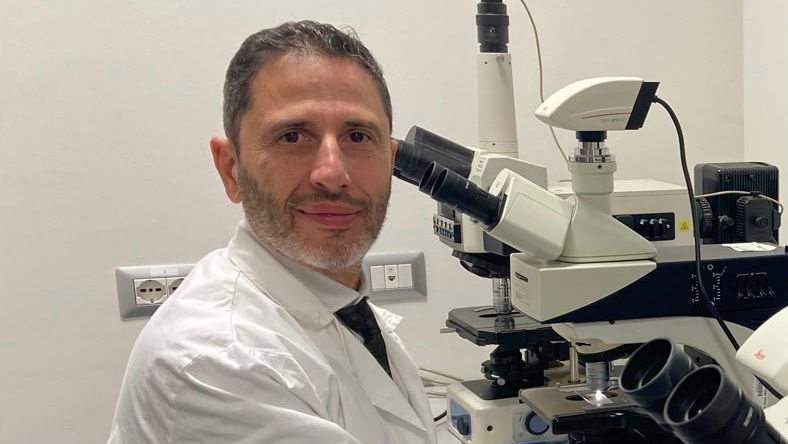
Professor Perra, your roles span from basic research to the governance of scientific infrastructures. How would you describe yourself?
I am a full professor of general pathology and pathophysiology at the University of Cagliari. I am also head of the University of Cagliari Biobank — the UniCa Biobank — which was established with the active participation of HEAL Italia, as HEAL Italia played a key role in bringing it to life. And I am deputy director of the Research Services Centre of the University of Cagliari.
Let’s get to the heart of the matter. Who is precision medicine for? For the sick, the healthy, doctors, researchers?
The most obvious answer is that precision medicine is aimed at patients — but it’s not aimed only at patients. The principle we want to make an everyday routine is a precision medicine directed, yes, at the patient who needs help, treatment, or a specific diagnosis — not a generic one for that disease, but for that disease as it presents in that particular patient. But that’s not enough. We also apply precision medicine to what we call proactive medicine: precision medicine directed at healthy people, to improve their health conditions and enable healthy ageing. The expectations of precision medicine are to improve the health of the general population and to offer the most appropriate therapy for each individual.
And what does it concretely serve?
Precision medicine serves to explore the characteristics of disease at a molecular level — not only the visible aspects, which is what classical medicine is based on, but the molecular features of the disease and of the person who has it — in order to direct, in the best possible way, both the type of tests to be carried out and the therapy, personalising it as much as possible. Precision medicine concerns the patient when they have a disease and we want the most suitable treatment for that patient. But it also concerns all citizens when they wish to engage in primary prevention — getting ahead of disease and understanding what risk characteristics they carry. And it concerns doctors and researchers too, because precision medicine is not a tool: it is a way of approaching medicine using innovative instruments.
Who will benefit most from this transformation?
The healthcare system will be the one that reaps the greatest long-term benefits from precision medicine, without question. Because precision medicine means, in the medium term, straightforwardly saving on treatment costs: we have a specific therapy, a specific diagnostic pathway, so fewer tests that are unsuited to the therapeutic pathway, fewer invasive tests, more tests focused on our actual objective. Then there is the long-term result, in which we at HEAL Italia believe very strongly: applying precision medicine in the coming years will mean reading across the population which congenital risk factors exist and linking them to those related to the environment and lifestyles, creating prevention pathways that will genuinely reduce the incidence of the most important diseases currently affecting the general population. We are talking about tumours, metabolic diseases and cardiovascular diseases.
There are also concerns. What are the most concrete ones?
There are always fears, and they exist here too. On the side of institutions and the management of the national health service, the main concern is immediate sustainability: precision medicine will certainly lead to a reduction in costs and an improvement in the services offered, but in the very short term it requires investment — not only in technology, but also in training. Doctors working in the community, hospital doctors and all the staff who work around patients need to be brought up to speed on the concept of precision medicine. Then there are the concerns on the citizens’ side. Precision medicine requires the collection of large quantities of data, which are not suitable for processing without the use of artificial intelligence tools. And this generates concerns related above all to poor awareness of what AI’s actual role in medicine really is — it is a support tool, not a decision-making tool. The other concern is the storage of data collected from each citizen: it is essential to provide information and explain the means we have today to guarantee data security and the privacy of every citizen.
You are head of the UniCa Biobank in Cagliari. What role do biobanks play in this scenario?
Biobanks are the silent but decisive infrastructure that makes precision medicine possible. They preserve biological samples — the various matrices we analyse — and keep them queryable over time. HEAL Italia was actively involved in establishing the UniCa Biobank precisely because a national precision medicine network needs solid, geographically distributed infrastructures. Without the ability to collect, preserve and network biological data, no personalised risk profile can be built and the knowledge needed for artificial intelligence to work well cannot be accumulated.
What is HEAL Italia’s objective in this context?
The HEAL project has, over these years, laid the foundations for precision medicine to become everyday medicine — not medicine reserved for centres of excellence alone. Precision medicine has been talked about for a long time, but until now it had never been interpreted in this sense: precision medicine for everyone, attainable precision medicine, or better still, precision medicine that reaches those who need it. Among the project’s objectives is the expansion of HEAL Italia-branded precision medicine centres. Italy has created not only knowledge and infrastructure, but also pathways and systems that help those who want to implement precision medicine to do so in daily practice — from large reference hospitals down to accredited clinics and outpatient facilities. To apply these principles to best effect, however, it is necessary to involve not only doctors, researchers and health technicians, but the entire population. In the absence of correct communication, suited to all social and cultural levels, confusion is created and fears are not dispelled.
If we imagine a future where precision medicine is routine, what will a typical day look like for someone using this system?
I love imagining what our future will look like, because I can see it within reach. The person — I no longer want to call them a patient, because we are in the world of precision medicine — needs to assess a risk of theirs, which could range from the risk of a serious illness to the risk of sustaining a traumatic injury during a sporting activity. Via an app, a phone call or a web portal, they will book an appointment at one of the precision medicine clinics, where they will be welcomed by nursing staff who will collect their clinical history and integrate it with the health information already contained in their electronic health record. They will have a blood draw. As soon as they leave, that sample will be processed: the different biological matrices will be separated and a series of analyses called multi-omics will be carried out — meaning we extract all possible information from that sample. Thanks to artificial intelligence, and above all thanks to all the scientific work done beforehand, we will be able to identify — not only from DNA but also from other matrices — what the risk profile is for that specific question the person has raised. The individual will then be contacted — in person or via video call, depending on their choice — and their risk profile will be explained to them. And they can also request that the results be stored over time: tomorrow they will wake up with a new question and will not need to go through the same procedure again. They will simply need to query what will be their personal health database — no longer a static medical record.
So not a system confined to a single centre, but a network.
Exactly. Precision medicine is collaboration, networks, integration. The patient’s sample will not necessarily be analysed at the centre where the consultation took place: it might travel to another HEAL Italia centre where the bioinformatics expert is based, and then to one for genetic counselling. But none of this will create any delay or problem for the person, who will ultimately receive the service that responds to their health request — understood as improving health, preventing disease, or recovering lost health.
What will be the key professional figures in this scenario?
Alongside doctors and nurses, the essential figures will be bioinformaticians: hybrid professionals, part biotechnologist, part computer scientist, with a strong biomedical background. And training will need to be rethought along multidisciplinary lines, starting from the concept of precision medicine as a holistic vision of the individual or patient. Doctors will need expertise in biomedical engineering, biosensors and data processing. Biomedical engineers will need biomedical competencies. It is a necessary cross-pollination.
And what will change in the doctor’s role?
My profession will bring even greater satisfaction, because compared to today I will see more people who manage to solve their problems, and I will see fewer and fewer patients and more and more people seeking advice on how to maintain their health. We are doctors not to keep our profession of saving lives at the last moment alive. Our goal is gradually to step back from the role of saviours of the sick and position ourselves as consultants — as people able to help others maintain their health.
A final message to the students who are today preparing to be the doctors of the future.
The message is to look at the future of medicine as a medicine that supports society, that must arrive before illness does, and that is above all oriented towards the person. So, an ever-greater capacity for empathy to read the needs even of people who, while in good health, cannot yet fully express them. A solid medical training, a technical and IT-oriented training, but also one grounded in the human sciences. And an approach to study in small groups, immersive, with a strong biotechnological focus. When your work also becomes your deepest curiosity, that is when you are truly heading in the right direction.