
Caring for the healthy: preventing illness before it arrives
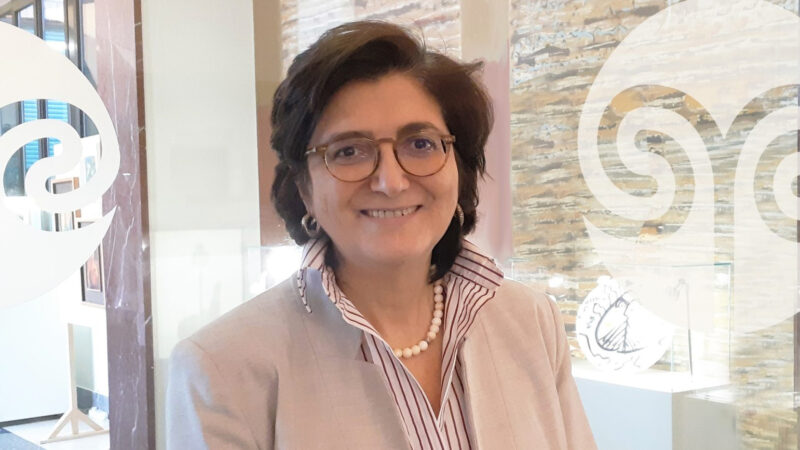
Professor Iacoviello, tell us about yourself and your work: what do you do every day, and what is your research focused on right now?
I direct the Department of Epidemiology and Prevention at IRCSS Neuromed and I am a Professor of Public Health at LUM University. My work focuses on identifying risk factors for chronic-degenerative diseases — those that affect the Italian, European and global population most: cardiovascular diseases, cancers, neurodegenerative diseases, metabolic conditions such as diabetes. And we do this by focusing primarily on the healthy population. What we like to call caring for the healthy. We don’t want to intervene only after a person has fallen ill — we want to prevent people from falling ill in the first place. How? Through prevention.
But a different kind of prevention from the traditional approach, right?
Exactly. Prevention can be applied uniformly across an entire population, but major advances in omic technologies and in the ability to process data through artificial intelligence now allow us to build highly precise and increasingly personalised risk prediction models. We don’t simply tell a population who is more likely to fall ill over the next ten years compared to someone else. We focus on the individual: we try to understand what that specific person’s probability is, and above all, which factors have the greatest impact for them specifically.
What HEAL Italia is enabling us to do — through its funding and the opportunity to build a network with so many other experts — is to answer the question: what do I need most? To stop smoking, to eat better, to exercise for an hour a day, to reduce my stress? All of this, in order to prevent disease.
Who is this medicine aimed at? Is there a specific category of patients?
Precision medicine is for everyone. There is no specific category, because it does not only concern people who are already ill — for whom it offers more precise diagnoses and more effective therapies — but also healthy people, who benefit from personalised prevention pathways. And it serves the national health system too, because by directing prevention efforts and personalising treatments, it reduces healthcare expenditure and frees up resources to better treat other conditions.
How does this personalisation work in practice? What do we have today that we didn’t have before?
Today we have far more at our disposal than what traditional medicine relied upon. We know increasingly that the environment we live in matters — whether we live near a park or a factory, in a densely urbanised city or in the countryside. But we also have enormous amounts of information about our biological functioning: through omics technologies and genome and metabolome mapping, we can gather vast amounts of data about how we are built and how our bodies respond to external stimuli.
All of this information allows us to build a precise picture of each individual — like a garment tailored specifically to that person. We like to say that medical knowledge, both of disease and of prevention, used to be like a dark night in which all cows look the same. We have aspirin, statins, antitumour drugs — but they are the same for everyone. We want to give colour to each patient. And how do we do that? By identifying their profile — unique and specific, made up of all their exposures: environmental, biological, behavioural.
A profile that can also indicate where to intervene as a priority?
Exactly. By bringing all this information together, we can tell a person: you are exposed to this particular disease risk, and these are the factors you need to focus on for prevention. There is no point doing two hours at the gym every day if what matters most for you is living in a calm environment. There is no point desperately trying to lose twenty kilograms if the most important thing for you is to stop smoking. This represents a truly remarkable shift in how we approach health: it helps us live better, diagnose more accurately, act more effectively — and it saves the health system resources that can be redirected toward new discoveries and improved treatments.
There are also concerns among citizens, though. What are they?
The expectations are around being treated more effectively and in a personalised way — think of a cancer patient: knowing they can test a therapy on their own cells before it is administered is a genuinely reassuring prospect. The fears, on the other hand, fall into three categories. The first is a lack of familiarity with the subject: I don’t understand it, it’s unknown territory. The second is concern about privacy — that data might become publicly accessible. The third is fear of inequality: these tests are expensive, will they only be available to those who can afford them?
How do we address all of this? By always pairing research with strong communication. Because if we do research and don’t share it with people — if we don’t explain it in a way they can understand — then our research is not as useful as it could be.
You coordinated the Moli-sani study for twenty years, involving over 25,000 people. Can you tell us how communication was an integral part of that project?
With the Moli-sani study, one of the most recurring concerns among participants was always the same: “You’ll end up selling our data to Google, to some multinational.” People are very afraid of being manipulated. And they need to be involved in what is being done. For this reason, we worked closely with communicators — we developed the project alongside journalists and science communicators, and we always paired the study with a communication strand delivered in many different ways: newsletters, calendars, meetings in town squares, in parishes, in local councils. The more you explain to people what you are doing, the more willing they are to contribute to research — and the less afraid they are of what is new.
What added value does a network like HEAL Italia bring to this kind of research?
It is essential, because this type of approach requires multidisciplinarity. You cannot achieve precision medicine alone. Doctors cannot get there by themselves: they need engineers, bioinformaticians, bioethicists, lawyers, philosophers, biotechnologists, data scientists. Without the ability to engage with all these different areas of expertise, this kind of science simply cannot be done.
A project like HEAL Italia, which has brought together completely different areas of expertise, has been fundamental in enabling exactly this. And I am certain that HEAL Italia will generate a great deal of new initiatives — even beyond the channels originally envisaged by the project.
How do you imagine the daily life of a person when precision medicine becomes routine?
It will be a person who generates data without even realising it — from their smartwatch to the sat-nav in their car — but with the awareness that this data is being used to improve the precision of their care. Let me give a concrete example. A young woman might be exposed to a risk of breast cancer that current screening methods have not yet identified, since those programmes begin at a certain age. Yet the age of onset for breast cancer is falling. Based on her genetic profile, that woman could undergo earlier screening, receive an early diagnosis, and have enormously greater chances of recovery. This applies to cancer, but it applies to every condition.
What professional roles will be needed in this future?
We need doctors, epidemiologists, healthcare professionals — but also engineers, data scientists, statisticians, bioinformaticians. And because we are dealing with data, we also need bioethicists and legal professionals specialising in data protection. What needs to change in education is the move away from such narrowly focused curricula: we need to create bridges between disciplines. The dual degree in medicine and engineering is one example. And we need to teach new subjects — computer science, artificial intelligence, big data — from primary school onwards, rather than treating them as something to fear.
A message for those who are studying today to become doctors or researchers?
Don’t be afraid of what is new, or of technology. Use it — but thoughtfully, intelligently, by learning how to use it properly. I don’t forbid my students from using ChatGPT — on the contrary, I encourage them to use it, and we run sessions on critical AI literacy together. A student who doesn’t know how to use an AI tool today is a student who hasn’t acquired the knowledge they will need tomorrow to do their job. So don’t be afraid — use these tools. But use them with intelligence.
Prof. Iacoviello and the HEAL Italia team work every day to turn this vision into reality: a medicine that knows each individual before they fall ill, that uses data to build personalised prevention, and that treats communication with citizens not as an add-on to research, but as one of its founding principles.