
The HEAL ITALIA Precision Medicine Center in Ancona: a new outpost for rare diseases
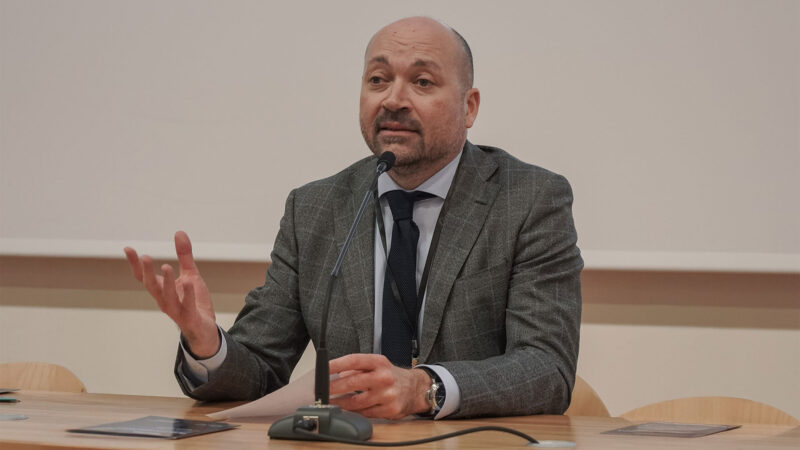
The HEAL ITALIA Precision Medicine Center in Ancona is not a project in its start-up phase, but an already operational reality that must now consolidate its identity within the broader national programme. As Prof. Moroncini emphasised, “I cannot say ‘yet to be born’ because it has in fact already been born: it must begin to fulfil its operational role in this type of context, because it has already begun to operate as individual projects and must instead become a territorial outpost of HEAL ITALIA.”
The Center develops physically within the Ancona university campus, articulated between the Polo Murri and the Polo Stacchio of the Faculty of Medicine and Surgery, in close connection with the University Hospital of the Marche region. A distance of just five minutes on foot connects the various spaces, allowing a continuous flow between clinical activity, biological sample collection and laboratory research.
The beating heart: the Marche Biobank
The starting point of the Center is the Marche Biobank — the first certified biobank in the Marche region and a fundamental node of the Italian and European biobank network. This is not a simple sample repository, but a complex infrastructure that allows the legal and controlled exchange of biological material with other research centers in Italy and Europe — an essential element for the study of rare diseases.
The Marche Biobank has an impressive storage capacity: it can accommodate up to 100,000 samples in liquid nitrogen and 30,000 samples at controlled temperatures (-80°C and -20°C). Biological samples, donated by patients with informed consent, follow a rigorously standardised pathway that includes collection, registration, processing, conservation and subsequent analysis for research purposes. The biobank management system automatically generates an anonymised identification code for each donor, guaranteeing the ethical-legal protection of participants.
A particularly significant element is the planned integration with the Electronic Health Record (EHR) of the Marche region, which will become operational in 2025. The University Hospital of the Marche region will be the first public hospital in the region connected to this shared digital record, which will allow continuous dialogue between hospitals, GPs and community hospitals, amplifying the potential of the Center.
A distributed laboratory with cutting-edge technologies
The Center makes use of a “distributed laboratory” articulated across three university sites in the Marche region: Ancona, Urbino and Camerino. This multicentre structure was born from the public-private partnership that gave rise to the Marche Biobank and represents a model of territorial collaboration capable of integrating complementary competencies and technologies.
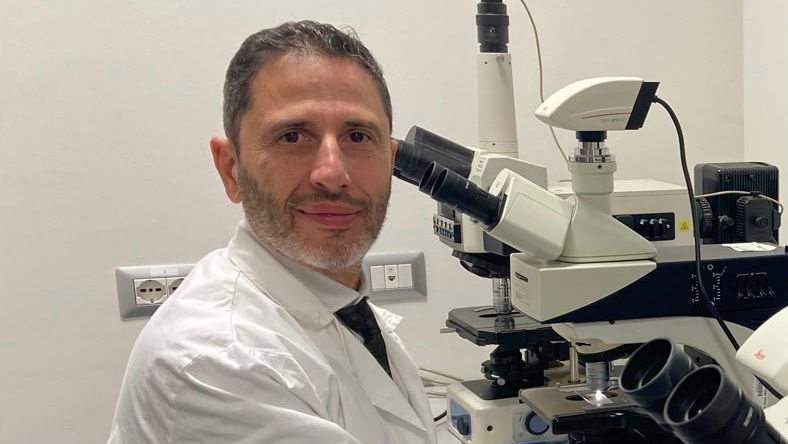
In Ancona, at the Polo Stacchio, three laboratories specialised in the analysis of single cells extracted from liquid biopsies (blood samples) and solid biopsies (tissue fragments) are concentrated. The technologies employed include:
The Cell Sorter, which makes it possible to isolate specific cell populations for multi-omic analyses (genomics, transcriptomics, proteomics, metabolomics)
Cytofluorimeters for the characterisation of cell populations
A laser capture microscope for the extraction of single cells from tissue samples
Digital PCR, particularly valuable for identifying and quantifying rare genetic mutations and low copy number genes
The Next Generation Sequencer (NGS), which makes it possible to obtain the entire DNA or RNA sequence from single cells
The Seahorse, an instrument for metabolic assays on live cells that allows measurement of oxygen consumption and cellular pH
In Urbino, a metabolomics laboratory equipped with an Orbitrap mass spectrometer has been set up, capable of separating known and unknown metabolites from biological samples with high precision.
In Camerino, a molecular biology laboratory operates, equipped with a Genetic Analyzer for cell authentication and the identification of genetic polymorphisms through Sanger sequencing — useful for certifying cell lines derived from patients or from experimental models.
Interdisciplinarity and territorial synergies
The Center was established within the Department of Clinical and Molecular Sciences but has a distinctly interdepartmental vocation. It can interface with all 11 other departments of the Università Politecnica delle Marche, including engineering, scientific and economics departments — the latter for aspects relating to the sustainability of the project.
In addition to the University Hospital of the Marche region, the Center collaborates with the INRCA (National Institute for the Care of the Elderly) in Ancona, recognising the importance of also following elderly patients with rare diseases or those who continue to live with these conditions throughout their lives.
A particular strength is represented by the already consolidated institutional framework: the Regional Coordination Centre for Rare Diseases, which falls under the Regional Health Agency of the Marche region and of which Prof. Moroncini is a member. The regional rare disease network was formalised by a decree of the Regional Council published on 25 February 2025 — just three days before the conference — signalling the promptness and concreteness of the institutional commitment.
Part of a national network
The Precision Medicine Center in Ancona does not operate in isolation, but is embedded in the national network of HEAL ITALIA Centers. Among these, particular prominence is given to the Center in Cagliari, coordinated by Prof. Sabrina Giglio, which deals primarily with rare tumours but also offers valuable genetic expertise for non-oncological rare diseases. Other centers are emerging in various Italian universities, in a process of shared growth that Prof. Moroncini described as “on the road” — in perfect harmony with the itinerant character of the HEAL Road Show.
From the paradigm of “some cures for some” to precise care for everyone
The ultimate objective of the Center is to overturn the traditional medical paradigm that offers “some cures available for some” in order to arrive at “a cure for all, but precise for each individual.” This is not a standardised model, but individualised models of prevention, diagnosis and therapy.
This approach is particularly crucial in rare diseases, where some patients may be the only three cases in Italy for a given condition, while other rare diseases — such as those of the immune system — may count tens of thousands of patients who nonetheless need to be stratified into homogeneous subgroups in order to receive personalised treatments.
Digital twins: the frontier of artificial intelligence
Among the most innovative ambitions of the Center is the creation of “digital twins” of patients — true digital avatars that integrate data from multiple sources: cells, liquid and solid biopsies, clinical data, environmental exposure, gender and age. These models can simulate in silico the identity of an individual patient or of homogeneous groups of patients, potentially making it possible to predict the response to certain drugs and understand disease progression without having to experiment directly on the patient.
As Prof. Moroncini emphasised, “this is clearly a somewhat more distant frontier, but optimistic as I am, I believe we will get there within our HEAL ITALIA project.”
A team in service of Precision Medicine
The Center is built on its people: physicians, researchers, doctoral candidates, collaborators of all ages working together in a team-based approach. The National Doctoral Programme in Precision Medicine, established within the programme, guarantees the training of new generations of researchers. The meetings that marked the birth of HEAL ITALIA — from the first gathering in Palermo at the Rectorate of the University, to the First National Forum on Precision Medicine a year later — testify to the strength of a group that moves together across the entire national territory.
“It is a journey along the road that we are all making together, and that we hope will bear the desired fruits,” concluded Prof. Moroncini, summing up the collaborative spirit that animates this ambitious research and care programme dedicated to those living with a rare disease.