
Diabetes: 580 million people worldwide, but the right treatment is different for everyone
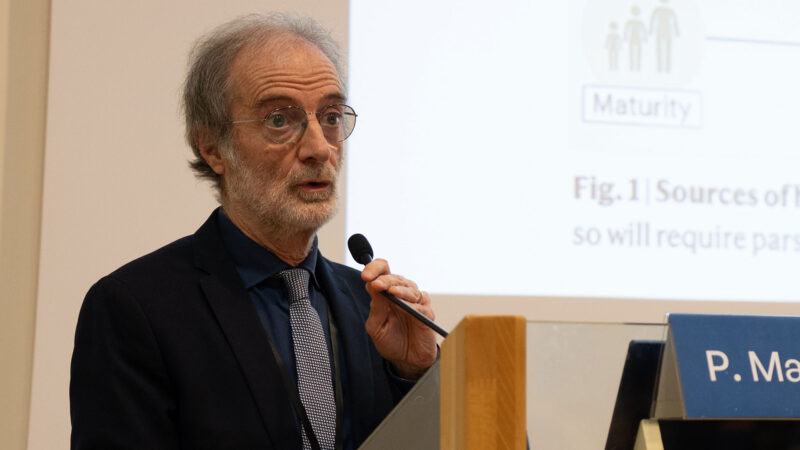
Professor Marchetti, can you introduce your professional background?
I am a professor of endocrinology, formerly a full professor at the University of Pisa, and I was director of the operative unit for metabolic diseases and diabetology at the Pisan university hospital. As you may have gathered, I have always — or almost always — concerned myself with what diabetes means for the people who suffer from this condition.
I have researched the causes that determine the various forms of diabetes and have also sought to find remedies for its prevention and, where possible, its regression. Pharmacological aspects, transplantation aspects, a whole series of dimensions that I am fortunate to be able to explore further within HEAL Italia, the project supported by the PNRR, an extended partnership. So I am here to try to reason, discuss and share some things on which we can also envisage positive developments for people with diabetes.
When we talk about Precision Medicine, who is it for?
The starting and finishing objective is to restore health in people who suffer from some condition that affects them. And Precision Medicine starts from the clinical and molecular characteristics of these people so that the tools for prevention and personalised care can be found for each specific situation.
It is a concept we have been working on for several years and it is very complex, especially in certain situations such as diabetes, which is a particularly heterogeneous syndrome.
Can you explain this heterogeneity of diabetes?
In the world there are, as calculated by the International Diabetes Federation in 2024, 580 million people with some form of diabetes. This is a number that continues to grow. It is estimated that by 2050 the figure will exceed 800 million people with diabetes if no way is found to halt this truly enormous increase in cases.
This situation is also accompanied by over 500 million people who have what is called pre-diabetes — meaning they do not yet have diabetes but are no longer in a state of normality. This is therefore the classic population on which targeted prevention measures could be implemented.
This disease, this syndrome, is still accompanied by acute and chronic complications, primarily vascular, that make the lives of people with diabetes genuinely complex. It is a very heavy burden to bear both at a personal and at a social level.
What are the costs for the healthcare system?
Global spending on diabetes represents 12% of all healthcare costs — that is, one trillion euros in 2024. In Italy there are over 5 million people with diabetes, each carrying their own burden. Almost 14 billion euros are spent on diabetes.
Nevertheless, although much progress has been made over the years in managing this disease, fewer than 8% of people with diabetes achieve their therapeutic targets. I am speaking of glycaemic control, but in the context of cardiovascular risk in which the person with diabetes is immersed. If we combine diabetes control, blood pressure control and lipid parameter control, fewer than 8% of people reach their target.
What does this mean?
This means that despite everyone’s efforts, the costs and the commitment, we are still far from addressing this situation in a truly effective way — precisely because diabetes is complex. We tend to think that a certain pill can work for 90% of people with diabetes, or that an injectable drug might do the same, when in reality it is essential to understand what that specific person needs.
We can do this through genetic studies, to identify risk but also to identify which type of therapy may be most effective. We can do it by targeting a precision approach with regard to the nutritional aspects, the diet of these individuals, physical exercise. There are genetic variations that mean certain nutritional aspects may work well for some people but not for others.
Whereas at present we give everyone more or less the same type of lifestyle advice. And so this is a world that, although known about for some time, is only now beginning to find attempts to respond to the needs of the individual.
How does the Precision Medicine pathway work when applied to diabetes?
It starts with the patient, moves through clinical activity by defining what is called the phenotype, and studies the molecular characteristics of that person. The specificities of that person are identified and then, after an analysis of the various data using artificial intelligence systems, the process returns to the patient with an approach specific to that particular person.
What is the role of research in all of this?
As has become clear, I am a clinician by background and I am also involved in research as part of how I conduct my work. It is clear that research and the person with a problem must be considered on the same level. The pathway is circular: person with the problem, clinical and molecular characteristics, return with a personalised therapy.
Research is fundamental because if I want to deliver a targeted therapy I must understand what the molecular profile is — both at the genetic level and at the level of the cells or tissues that are no longer functioning — what the characteristics are. Thereafter the information must be integrated and returns as a complete and detailed picture of that person’s characteristics, through which the clinician can then carry out their work.
How is the paradigm of the doctor changing?
It is clear that the paradigm is changing, also because the doctor must first become familiar with the heterogeneity of diabetes. But the data analysis component and the assessment of molecular characteristics must also become familiar and continuously interact with the clinician, so that the knowledge of artificial intelligence and everything we mentioned earlier can be applied to the clinical dimensions of that particular person.
However, the doctor too must, in this paradigm shift, take on a role requiring additional specific competencies. The doctor must become increasingly aware that every person with diabetes has their own characteristics.
Can you give us some examples of this heterogeneity?
The four main categories of diabetes are: type 1 diabetes, which affects approximately 5–10% of people with this syndrome and is characterised by the loss of the pancreatic beta cells that produce insulin. Type 1 diabetes requires a specific therapeutic approach, namely the administration of insulin.
Type 2 diabetes, which accounts for approximately 90% of all people with diabetes and is associated with obesity, is increasingly considered to be a collection of specific groups. In almost all cases, at a certain point the inability to produce enough insulin predominates, but some people also have a form of insulin resistance that makes it more difficult to use insulin. But increasingly within this large category of type 2, clusters with certain clinical characteristics are being identified.
Then there are the monogenic forms in which a single type of genetic alteration causes the onset of diabetes. There are oligogenic forms in which two or three genes have an impact. There are forms of secondary diabetes. In short, the doctor, the diabetologist, must know that all these forms of diabetes exist, each requiring its own specific approach.
And from a therapeutic standpoint?
Then there is the therapeutic side. There are drugs that have side effects and therefore cannot work as they should because the person who is supposed to take them ends up stopping, even though the drugs are indicated and effective for them, because those individuals have particular genetic characteristics.
Knowing this in advance — being able to direct treatment accordingly — means acting in the person’s best interest, and saving money because you have avoided prescribing sometimes costly drugs for months in cases where they are not needed, with significant downstream consequences.
What are the concerns and expectations regarding Precision Medicine?
There are expectations and concerns in various directions. First of all, there is a very delicate aspect that requires deep reflection — everything connected to privacy, which must certainly be respected. But it is essential to avoid a situation where information cannot be used.
Many clinicians have retrospective studies that they cannot publish in Italy. For example, in serious diseases, patients may have since died. While we might be able to understand why that person died, we cannot do so because that person can obviously no longer give their consent.
We must find a balance between the rights of individuals — which I strongly support — and the need to be able to use data. That is one concern.
And with regard to training?
The other thing that could be improved in Italy is finding a way to train new professionals. Because everything we were discussing earlier requires new and specific clinical competencies on the part of the doctor, and on the other hand it also requires the training of professionals who can act as a bridge — thanks to the knowledge they have acquired — between raw data and the interpretation of the meaning of that data.
I am referring in particular to the need to have an ever greater and more competent number of molecular biology experts and geneticists who can collaborate with those who analyse data to quickly find answers to the needs of people with specific diabetes-related problems.
What is HEAL Italia’s importance in all of this?
HEAL Italia is the first organisation, the first institution that focuses on all the topics we were discussing earlier across various clinical and organisational contexts. HEAL Italia has placed emphasis on the need to integrate all molecular and phenotypic information of individuals across various areas of healthcare: from metabolic, cardiovascular and oncological problems to rare diseases. The objective is to start from this situation to build models of Precision Medicine centres that can deliver everything we have discussed in various contexts. So environments in which a person who has a problem enters, the facility takes charge of them at every level and then returns to the person with a response tailored to their specific characteristics.
HEAL Italia is advancing this vision — which has become a mission — at various levels: from the valorisation of scientific and clinical resources to the organisational dimension of relations with the healthcare system for the practical implementation of all of this.
Why did you choose to become part of the HEAL Italia project?
Initially it was the fact of having been contacted for certain specific competencies I had that allowed me to participate in this extended partnership project 6. But initially I saw HEAL Italia as an opportunity to share and expand competencies and knowledge in a specific field.
As time went on I became increasingly involved in the trajectory that HEAL Italia was taking, because there was the possibility — and in this sense we are still working and hope to continue working better in the future — of being able to have a direct impact on the healthcare structure of our country.
A very compelling summary of what drives each of us who works in healthcare: responding to the needs of a person who has a problem, and doing so not in an approximate way, but with specific, targeted responses.
So HEAL Italia covers the entire pathway in this sense and I am proud to be involved in it.
Over all these years, have you witnessed advances that you could not have imagined when you started your career?
Yes, there have certainly been many advances, both in terms of technological progress in understanding what is not working in a given situation. In diabetes, there are these cells that should produce insulin and no longer do, and we have made enormous progress in understanding why — although the question marks obviously remain.
Then at the molecular level, in various other aspects of diabetes, the physiology and pathology of the organs directly or indirectly affected by diabetes: from the eyes to the kidneys, to the heart, obviously the cardiovascular system, and more recently the liver. A great deal is being learned.
Then there is the entire component relating to new drugs, which is certainly a context in which a great many advances have been made, but which at the same time also presents certain risks.
What risks?
As we mentioned earlier, the pill or injection that works for everyone. These are certainly drugs that are used by a great many patients with great satisfaction, but at the same time, for example drugs known as agonists of certain receptors — in particular the GLP-1 receptor — can, after a few months, be spontaneously discontinued by the patient due to side effects.
So there is a whole world of questions: why a drug that is working well might at a certain point be discontinued due to side effects, when a precise assessment of the individual could also help us understand with whom certain drugs are more effective and produce fewer side effects.
I mentioned earlier that physical activity must be personalised, that nutritional aspects must be personalised. So in all of this, progress has been made and continues to be made. The journey still requires dedication and commitment.
Let us leap into the future: Precision Medicine has become routine. What might that look like?
Let me put myself in the shoes of a person who has a problem — with diabetes, for example. I enter the Precision Medicine centre, I am welcomed, I have the opportunity to interact with a doctor. The doctor I speak with is able to understand whether my situation is of one type or another and places me in the right category.
Making a diagnosis of diabetes is straightforward: you look at the blood glucose values and other parameters. Much more complex is placing it in the right category. If from a clinical standpoint I am placed in a category with slightly atypical characteristics, at this point the molecular assessment mechanism comes into play, which then feeds back to the doctor. And the doctor, together with the geneticist and other professional figures, precisely identifies what type of diabetes I have and then moves on to therapy.
And with regard to prevention?
Our healthcare system, especially in terms of diabetes care, is structured in a very widespread and capillary manner. There are many diabetology services distributed across all of Italy. So in a hub and spoke system, with appropriate restructuring in the broader sense, it is realistic to think that all of this could be achieved.
A little additional creativity is needed with regard to diabetes prevention because our system is not ready to decide what to do. In the world there are 600 million people with pre-diabetes. These people escape our observation and are those who subsequently go on to swell the ranks of people with diabetes.
And here a great deal can be done in a Precision Medicine system in the future with the help of general medicine. The framework should provide for the at-risk person to be identified by the GP and then referred to the relevant facility to carry out all the clinical and molecular assessments needed to prevent that person from developing diabetes.
Is Precision Medicine confused with artificial intelligence?
First of all, one situation worth clarifying is that Precision Medicine is sometimes confused with artificial intelligence. Artificial intelligence can support Precision Medicine, but Precision Medicine must not be identified with artificial intelligence.
In Precision Medicine there is the support of systems, databases and bioinformatics. All of this certainly also helps — through particular technological systems — to arrive at a diagnostic hypothesis. However, forgive me, what remains central to Precision Medicine is the competence of the professional.
Ultimately we must not forget that we have a person in front of us, and that everything technology offers us must then be applied with care for the person, which in turn requires entering into a relationship of trust with the professional.
I would not want people to think of a system that overlooks our being human — both from the perspective of the person with the problem and of the professional trying to solve it.
How do you see the prevention of type 1 diabetes in the future?
Even more so in type 1 diabetes — the kind that requires the use of insulin — numerous new drugs capable of preventing or delaying the onset of the disease are currently under evaluation. And here the molecular characterisation of a person at risk of type 1 diabetes could genuinely mean that that person does not develop type 1 diabetes at all, or develops it in a less severe form than the disease can currently take.
A final message to the new generations?
The new generations of doctors and researchers should understand the importance of having a broad vision. Each professional will continue to do their own work, but within a team-oriented framework. That is, multiple competencies will be brought together to assess the patient, the person, and to provide all the answers they need at that moment.
The important thing is to reflect on the importance of working as a team, of coming together so that everyone can contribute — each with their own professional expertise — and give the patient the answers they need at that moment, for their health but also at that particular moment in their life.
Prof. Marchetti continues to be a key reference figure in the Italian landscape of diabetology and Precision Medicine. Through his active participation in the HEAL Italia project, he is contributing to the building of a healthcare system in which every person with diabetes can receive the most appropriate care for their specific characteristics, transforming the promise of Precision Medicine into concrete reality for millions of patients.