
The Exposome as a Prevention Model in Asbestos-Related Diseases
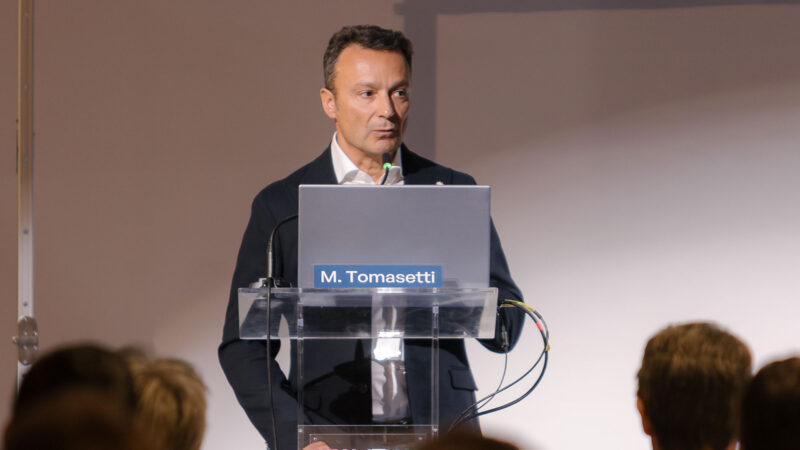
Prof. Tomasetti opened his presentation by thanking Prof. Gianluca Moroncini for the invitation and for the involvement in the HEAL Italia PNRR project, describing it as “a magnificent undertaking.” The study presented evaluates the exposome as a prevention model in relation to asbestos-related diseases.
Asbestos, thanks to its properties as a thermal and acoustic insulator and its high resistance, was very widely used in the past and continues to be used today in various sectors: from construction (in fibre cement) to transport, from pharmaceuticals through to domestic use. The distribution of asbestos use worldwide was extensive in the past, until the ban on production and use was progressively introduced in many countries.
In Italy, use was banned in 1992 following its proven carcinogenic activity. Subsequently, many countries adhered to the ban, with the United States being the last country to do so in 2024. However, as the speaker emphasised, not all countries have banned asbestos: Russia, China and India continue to produce and use this material to this day.
A significant finding to emerge from the study is that the geographical distribution of asbestos use does not coincide with the incidence of mesothelioma — the most well-known asbestos-related disease. This discrepancy suggests the existence of other factors influencing the development of the disease, making a preventive approach based on multi-factorial exposome analysis even more important.
The grim prognosis and the importance of prevention
Diseases linked to asbestos exposure carry a grim prognosis. In the case of mesothelioma, survival varies but always remains low, with an average of approximately 12 months. Given the limited availability of effective therapeutic options, as highlighted by Tomasetti, what takes on greater importance is the concept of prevention: “For these conditions, what is most important is precisely the concept of prevention, because we have seen that treatment options are few.”
Precision prevention: a multidimensional concept
Precision prevention represents the most important approach to these conditions. It is a broad and complex concept involving several factors: genetic diversity, individual behaviour, health status, lifestyle, the communities in which the person lives, environmental exposures and the technological capacity to analyse specific biomarkers.
The exposome model according to Christopher Wild
This concept can be summarised in the exposome model, introduced for the first time by Christopher Wild. The exposome presupposes that the health of the individual derives from a series of exposures classifiable into two main categories.
The general external exposome encompasses environmental factors such as air and water quality, the presence of polluted sites near the place of residence, exposure to radiation and sunlight, traffic, intensive livestock farming and proximity to airports. All of these elements constitute the environmental exposure in which the individual lives.
The individual-specific exposome includes personal health habits such as smoking, alcohol consumption, physical activity, diet, level of education, social impact and factors such as weight and obesity. All of these factors are specific to the individual.
These two levels of exposome — the general external and the individual-specific — act upon the individual, generating modifications at the genomic, epigenetic and metabolomic levels, thereby impacting the individual’s overall health status as they react to these inputs.
Study objectives and design
The aim of the study was to evaluate this integrated model with the objective of developing a predictive model capable of identifying asbestos-related diseases at an early stage, positioning itself within the context of preventive medicine. Prof. Tomasetti illustrated the study workflow, explaining how the research group approached the analysis of the exposome.
The study was structured in three main phases: a training phase in which a population exposed to asbestos was examined, evaluating the external exposome (both general and specific) in order to obtain a prediction model; a verification phase in which this model was tested on a subsequent population also exposed to asbestos with various asbestos-related diseases; and finally, after the verification phase, the internal exposome was incorporated to evaluate a precision prevention model.
The study population: 20 years of follow-up
For the training model, 845 asbestos-exposed subjects were enrolled at the Occupational Medicine unit in Ancona, the majority of whom were male. The population was composed as follows: 30% were subjects exposed but without either benign or malignant associated conditions; 21% had benign conditions; 36% were mesothelioma patients; and 13% were subjects who had developed other tumours, including lung, prostate and bladder cancer.
This population was enrolled from 2005 to 2025 — a period of 20 years — allowing a longitudinal follow-up of great scientific value. The subjects were divided into four groups: subjects without asbestos-related conditions, subjects with benign conditions, subjects with malignant asbestos-related conditions, and subjects also exposed who had developed other tumours.
Analysis of the external exposome
Both the general and specific external exposome were examined in this population. For the general external exposome, the researchers took into account each individual’s place of residence based on the questionnaire completed at enrolment. From this, they calculated distances from the airport, port, refinery, polluted sites and intensive livestock farms. They also examined air and water quality in the residential area, assessed whether subjects lived in rural, agricultural or urban settings, and considered the number of inhabitants of the city of residence.
Regarding the individual-specific external exposome, individual parameters were assessed such as body mass index, smoking, alcohol consumption, physical activity, diet, level of education and other behavioural factors.
The predictive model based on centroid distance
Through statistical analysis of all these parameters, the researchers developed a predictive model based on “centroid distance.” This model proved capable of correctly identifying 84% of healthy subjects, 94% of those with benign diseases and 90% of those with malignant conditions, allocating them correctly to their respective groups.
The verification phase and the importance of follow-up
For the verification phase, a sub-population of 356 subjects also exposed to asbestos was selected, chosen specifically because they had complete follow-up data available. These subjects had been enrolled when healthy, and over the course of 20 years some had not manifested any condition, while others had developed benign conditions, 7% had developed mesothelioma and 19% other tumours.
Applying the centroid distance-based prediction model to this population, efficacy initially decreased, with a predictive capacity of 69% for healthy subjects and lower performance for the other groups. This highlighted the need to integrate further parameters into the model.
Integration of the internal exposome: the role of cytokines
At this point, the internal exposome — represented by molecular biomarkers — was introduced. The importance of follow-up emerged clearly at this stage: the researchers had access to pre-diagnostic samples, that is, biological samples from subjects who had been collected when they were healthy and who subsequently developed the condition 6–7 years later.
As a first step in the internal exposome analysis, a panel of inflammatory cytokines closely associated with asbestos-related diseases was evaluated. By introducing these biomarkers into the prediction model, the efficiency in separating the groups increased significantly once again. The model proved capable of identifying 86% of healthy subjects and 85% of subjects with malignant asbestos-related conditions, correctly allocated to their respective groups (11 people out of 13 in the correct group).
Performance was less efficient for the intermediate groups: the group with benign conditions was found to be closer to that of healthy subjects, while the group with other malignant tumours was found to be closer to that with malignant asbestos-related conditions.
A complex model for precision prevention
The project represents a concrete example of how Precision Medicine can be applied to primary prevention. The integration of environmental data (general external exposome), behavioural data (individual-specific external exposome) and biological data (internal exposome with molecular biomarkers) has made it possible to develop a predictive model capable of early identification of subjects at risk of developing asbestos-related conditions.
This multi-level approach allows individual risk to be stratified far more accurately than by considering occupational asbestos exposure alone, opening the way to personalised preventive strategies. The model can be applied to implement targeted health surveillance programmes, concentrating resources on the highest-risk subjects and enabling timely preventive interventions.
Future perspectives and collaborations
Prof. Tomasetti concluded by thanking all the collaborators who made this study possible. He acknowledged the work of the Occupational Medicine clinic — in particular Prof. Lori Santarelli, Monica Marti, Massi Boracci, Federica Monaco and Olga Strogovez — who did “an enormous amount of work” in identifying all the exposures for each individual.
The follow-up work proved particularly demanding: understanding what had happened to people monitored 20 years earlier “was no easy undertaking.” The researchers also had to consult mortality registries and used data from the RENAM (National Mesothelioma Registry), thanks to collaboration with Dr. Giovanna Gaspargrappasonni and Dr. Cristina Pascucci, to obtain information on the mesothelioma cases enrolled in the study.
The study demonstrates how Precision Medicine in prevention requires a holistic approach integrating multiple levels of information, and underlines the importance of longitudinal studies with long-duration follow-up for validating complex predictive models. The exposome emerges as a powerful theoretical and methodological framework for understanding the interaction between environmental, behavioural and biological factors in the genesis of diseases, opening new perspectives for personalised prevention.