
Precision Medicine and diabetes: when common diseases conceal rare conditions
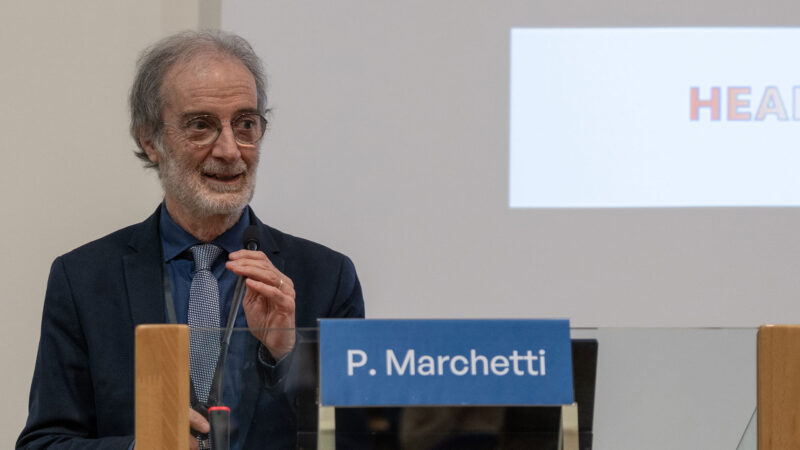
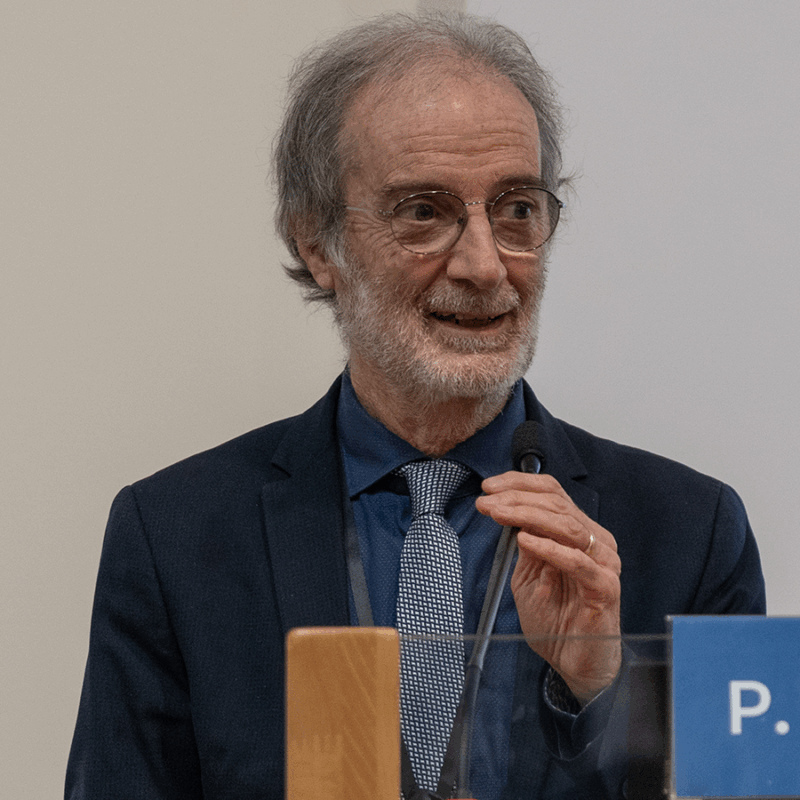
Prof. Marchetti opened his presentation by clarifying the meaning of the term “Precision Medicine” — a relatively recent but rapidly expanding branch of medicine. Precision Medicine is understood as the discipline that develops strategies to prevent, diagnose, formulate prognoses for and treat diseases while taking into account the individual variability of each patient.
This approach represents a paradigm shift compared to traditional medicine, which tended to standardise treatments. Precision Medicine instead recognises that each patient is unique and that this uniqueness must guide therapeutic choices. Individual variability derives from multiple factors: genetic, environmental, lifestyle-related, pharmacological and many other elements that interact in complex ways.
The growing importance of Precision Medicine in clinical and scientific settings is evidenced by the increasing number of publications and the interest of health institutions at national and international level. This development has been made possible by “omic” technologies (genomics, proteomics, metabolomics, transcriptomics) and by the ability to integrate large quantities of data through artificial intelligence.
Diabetes: a common condition with rare forms
To illustrate concretely how Precision Medicine applies to rare diseases, Prof. Marchetti chose to speak about diabetes — the condition to which he has dedicated his research career. At first glance, diabetes might seem the least obvious choice for a conference on rare diseases: it is in fact one of the most widespread chronic conditions in the world, with hundreds of millions of people affected.
However, as Marchetti demonstrated, certain forms of diabetes can and must be considered rare diseases, requiring highly personalised diagnostic and therapeutic approaches. This apparent paradox reveals a fundamental truth of Precision Medicine: what appears to be a common disease is often a heterogeneous collection of different conditions, some of which are indeed rare.
Monogenic diabetes: when a single gene makes the difference
The first category of rare diabetes presented by Prof. Marchetti is monogenic diabetes, caused by the mutation of a single gene. Unlike type 1 and type 2 diabetes, which have complex and multifactorial aetiologies, monogenic diabetes is a well-defined genetic condition.
Several forms of monogenic diabetes exist, including MODY (Maturity Onset Diabetes of the Young), which typically manifests in young people, and neonatal forms of diabetes. These conditions are rare: they represent only 1–2% of all diabetes cases. However, their correct identification is fundamental because it radically changes the therapeutic approach.
A patient with monogenic diabetes might be incorrectly diagnosed as having type 1 or type 2 diabetes and treated with insulin or other standard drugs. Instead, once the specific genetic mutation is identified, it is possible to prescribe targeted therapies that are far more effective. In some cases, forms of diabetes that would require insulin can be managed with simple oral drugs, dramatically improving the patient’s quality of life.
This example perfectly demonstrates the value of Precision Medicine: accurate phenotyping, supported by genetic analysis, allows a patient to be reclassified from one diagnostic category to another, with decisive therapeutic consequences.
Gestational diabetes: when pregnancy reveals metabolic vulnerabilities
The second form of diabetes discussed by Prof. Marchetti is gestational diabetes — a condition that manifests during pregnancy in women who were not previously diabetic. Here too, what appears to be a relatively common condition actually conceals considerable heterogeneity.
Not all women who develop gestational diabetes have the same underlying physiopathology. In some, the condition is caused primarily by insufficiency of the pancreatic beta cells — the cells that produce insulin. In others, the main problem is insulin resistance, meaning the reduced ability of tissues to respond to insulin. In others still, specific genetic factors intervene that predispose to the condition.
This variability requires personalised therapeutic approaches. A pregnant woman with gestational diabetes due primarily to insulin resistance might benefit from different therapies compared to one with beta cell dysfunction. Accurate phenotyping during pregnancy not only allows better management of gestational diabetes itself, but can also predict the future risk of developing type 2 diabetes, enabling targeted preventive interventions.
Gestational diabetes therefore represents a unique opportunity to apply Precision Medicine: identifying specific subtypes, personalising treatment during pregnancy and implementing long-term prevention strategies for the mother and, potentially, for the child.
The importance of phenotyping and omic technologies
A central concept of Prof. Marchetti’s presentation was the importance of accurate phenotyping. By phenotyping is meant the detailed characterisation of the clinical, biochemical and molecular manifestations of a disease in a given patient.
“Omic” technologies represent fundamental tools for this characterisation. Genomics makes it possible to identify genetic variants associated with the disease. Transcriptomics analyses which genes are actively expressed in the patient’s cells. Proteomics studies the full complement of proteins present, while metabolomics identifies the metabolites — the end products of biochemical processes.
By integrating these different levels of information, it is possible to build a complete molecular profile of the patient and their disease, guiding personalised therapeutic decisions. In the case of diabetes, for example, genomic analysis can identify monogenic mutations, while proteomics and metabolomics can reveal specific defects in glucose metabolism.
Interdisciplinary collaboration and clinical-scientific networks
In the concluding part of his presentation, Prof. Marchetti emphasised the strategic value of interdisciplinary collaboration and the building of clinical-scientific networks. Precision Medicine, by its very nature, requires the integration of different competencies: clinicians, geneticists, bioinformaticians, biostatisticians and molecular biologists must work together.
In the context of rare diseases, this collaboration becomes even more crucial. As already highlighted in other presentations at the conference, rare diseases by definition affect few patients. To reach statistically significant numbers for research, it is necessary to aggregate data from different centers, often in different countries. International networks make it possible to share knowledge, diagnostic protocols, genomic data and therapeutic experience.
The HEAL ITALIA project, with its Precision Medicine Centers distributed across the national territory, represents exactly this type of collaborative infrastructure. Spoke 8, coordinated by Prof. Marchetti, has an applicative vocation: to translate research discoveries into clinical protocols usable in daily practice, ensuring that the benefits of Precision Medicine actually reach patients.
From diabetes to rare diseases: a replicable model
The example of diabetes presented by Prof. Marchetti offers valuable lessons applicable to many other conditions. The fundamental message is that the distinction between common and rare diseases is not always clear-cut. Within what we call “diabetes” lie several different conditions, some of which are rare and require specific approaches.
This principle applies to numerous other conditions. Many diseases classified as common may in reality be aggregates of different subtypes, some of which are rare. Precision Medicine, through accurate phenotyping and omic technologies, makes it possible to “disaggregate” these broad diagnostic categories into more homogeneous subgroups, each with its own molecular characteristics and its own therapeutic indications.
At the same time, the study of rare forms of a common disease can provide valuable insights into the physiopathology of the disease as a whole. The monogenic mutations that cause rare diabetes, for example, identify genes and biological pathways that are also relevant for understanding the more common forms of diabetes.
Personalised diagnosis, prognosis and treatment
The Precision Medicine approach described by Prof. Marchetti is articulated around three fundamental pillars:
- Personalised diagnosis — Going beyond traditional diagnostic categories to identify the specific disease subtype, using genetic, molecular and clinical markers. In diabetes, this means distinguishing between type 1, type 2, monogenic forms and gestational diabetes, and within each of these categories identifying further subtypes.
- Individualised prognosis — Predicting the course of the disease in the individual patient based on their molecular characteristics. Some patients with gestational diabetes, for example, have a very high risk of developing type 2 diabetes in the future, while others have a much lower risk. Identifying who is at risk makes it possible to concentrate preventive interventions where they are most needed.
- Tailored treatment — Choosing the most appropriate therapy based on the patient’s profile. A patient with monogenic diabetes may respond much better to specific drugs than to insulin. A pregnant woman with gestational diabetes may benefit from different interventions depending on the prevailing physiopathological mechanism.
HEAL ITALIA: from the individual to the population
Prof. Marchetti’s presentation highlighted how the HEAL ITALIA project is building an infrastructure that makes it possible to apply Precision Medicine on a large scale. This is not merely about offering personalised treatments to individual patients in centres of excellence, but about creating a system that makes these approaches accessible to all citizens, regardless of where they live.
Spoke 8, with its applicative vocation, has the task of translating research results into implementable clinical protocols, training healthcare professionals in the principles of Precision Medicine, and developing standardised diagnostic-therapeutic pathways for the various rare conditions.
As Prof. Marchetti concluded, Precision Medicine represents the future of the care of rare diseases — but that future can only become reality through collaboration between researchers, clinicians, patients and institutions. The HEAL ITALIA project, with its Precision Medicine Centers and its thematic spokes, is building precisely this collaborative network, demonstrating that it is possible to move from principles to practice, from laboratory research to the patient’s bedside, offering each person the most precise care possible for their specific condition.