
There is no such thing as a perfect DNA: Precision Medicine is for everyone
Professor Novelli, can you introduce your journey in medical genetics?
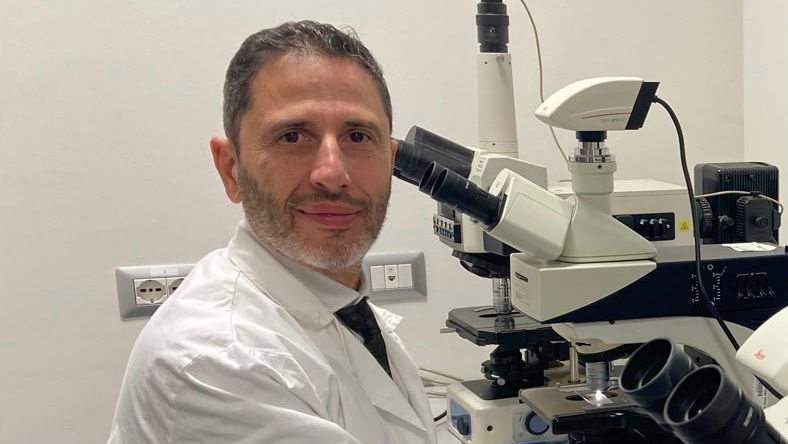
I am a geneticist at the Policlinico di Tor Vergata, where I hold the role of director of the Medical Genetics operative unit, as well as having been a full professor of Medical Genetics for a very long time. I have been working with DNA for years — I would say I was one of the first in Italy to use it for the diagnosis of diseases, especially rare ones and those without a name, meaning without a diagnosis.
The revolution of DNA — that is, the possibility of using DNA as a diagnostic test — has often changed the lives of these patients, because it has opened not only the path to obtaining a diagnosis and ending what had been an odyssey through hospitals around the world — finally there is a name for the disease, one that is recognised — but it then opens up perspectives and possibilities for treatment.
In particular I have worked on hereditary diseases, and I have discovered the causes of a great many rare diseases and common diseases such as psoriasis, sclerosis and heart attack, because, as my American friend Francis Collins used to say, remember that all human diseases have a genetic basis — on this there is no doubt.
When we talk about Precision Medicine, who exactly is it for?
Let us say there are two different types. Precision Medicine is the medicine of the future. But what is the medicine of the future? Because it is already here today — it is not really of the future. It is what we call proactive medicine.
Until now, what was medicine? We waited for the symptom, the diagnosis and, where possible, the treatment. But this is late, because you intervene when the disease has already set in. What are the new indications? That you must try to intervene before the disease arises or manifests its symptoms, in order to try to slow it down, treat it or prevent it from erupting or from becoming severe.
How can all this be done? Certainly not through fortune-telling or going to a magician. Today we have science to help us do this, and it is based on individual knowledge. Why precision? Because each of us is different from another. Two identical individuals have never existed on this earth. Consider that not even monozygotic twins — that is, identical ones — are alike in every single way. They too have differences in their DNA.
So Precision Medicine works differently for patients and for healthy people?
Exactly. In patients — that is, in sick people — where the disease and the genetic damage are known, today we have drugs that work only for that specific person. It is like saying the right drug for the right person. Many oncological drugs today are made on this basis. It is not like chemotherapy of the past, the same for everyone, which caused a great deal of harm — but because we did not know that there were people who reacted in one way or another.
Today fortunately we know to whom to administer a certain drug and to whom not, and we even know whether that drug may cause adverse events and therefore how to adjust the dose. For each of us a different dose, a different quantity of drug and a different response may be needed — both in terms of efficacy and in terms of adverse effects.
But someone might ask: can there be a Precision Medicine for healthy people? Here it is a little different — it is called predictive medicine because you are not yet ill, so you do not need medicine yet. What do you assess there? Whether you are at risk of developing a disease or not. Why? Because perhaps you have something that runs in the family, because you have had a father, a mother, an uncle, a brother with a genetic disease and you therefore want to know whether you have inherited it or not.
Does the environment play an important role in all of this?
Absolutely. If you live in a particular risk environment — exposed to radiation, exposed to drugs, to environmental contamination, to pollution — your genome can react differently. All of this is what predictive medicine covers, and it puts you in a position to even change your lifestyle, because we must not forget that DNA is important and is at the basis of everything, but the environment is what then makes the difference.
When people come to me wanting to know if they are at risk, and we find risk factors for diseases such as heart attack, atherosclerosis, diabetes, Alzheimer’s and Parkinson’s, one might say “but what can we do?” Well, a great deal can be done: for example, changing lifestyle, not smoking, doing physical exercise — which is the most important thing — taking certain drugs if they are necessary. This leads us to delay the progression of chronic and debilitating disease.
You mentioned diabetes as an example…
Exactly. This is what we call proactive medicine, which will be extremely important in the coming years because it will lead to an enormous reduction in the burden of these diseases on public health. Just think: we are expecting a pandemic of diabetes in the coming years — we are expecting 400 million people to be affected by diabetes worldwide. And how do we manage that? And the same applies to obesity, which is a disease — let us not forget. Today we have the tools to understand precisely who should undergo certain tests or not.
For researchers, how stimulating is all of this?
It is fundamental, because it has allowed us to understand that biological individuality is at the basis of everything and has allowed us to understand that each of us is different from another. Finally we are beginning to understand why some people developed certain diseases and others did not.
Since medicine was born it has asked itself only three questions: first, why does one person fall ill and another does not? Second, why does a drug work for me and not for someone else? Third, why does that drug cause adverse reactions in me and not in another person? If you look at these three questions, the whole of medicine is contained within them. Today we have the answers, and those answers are being discovered more and more for all diseases — and this is the work that researchers must do.
But is there a risk that predictive medicine becomes a “genoscope”, as you call it?
This is very important. Predictive Precision Medicine must be administered in the right centres and above all through a phase that is crucial: the pre-test genetic counselling — note that I said pre-test, before the test is carried out — and then with post-test counselling, as we do in our centre.
What is wrong with this predictive medicine is that unfortunately commercial use tells you “send me your DNA” — perhaps you buy a kit on the internet, do a saliva test at home and send it off to Wisconsin where the answer arrives: 300 pages in English of DNA factors, and these patients come to us saying “but what am I supposed to do?”
You cannot practice Precision Medicine in this way if you do not know the clinical history of that patient or that individual, of their family, what their parents, uncles, siblings or themselves may have died from or fallen ill with. How can you practice predictive medicine without examining a person? This is the wrong way of doing it — what I call not genetics, but what I call the genoscope: it is a sort of horoscope.
Are there already people undergoing these tests?
If we look at the global context, there are companies like 23andMe — the one belonging to Mr Google in the United States — that have been offering this test for a long time. There are more than 15 million people who have done it, so just imagine — all their DNA is deposited in there.
We, who use this very rational approach — pre-test and post-test counselling — obviously do so taking individual situations into account. Patients who have a disease follow an established regional reimbursement pathway where it is covered, and these tests cost them practically nothing or just the co-payment. Then there are tests that are not included in the tariff schedule and are therefore at the individual’s expense. Being a public hospital, we have opened a predictive medicine clinic where some non-reimbursable tests are paid for by the patients, but the fees are clearly kept modest.
What has HEAL Italia contributed to your work?
One product of this PNRR project has been precisely the activation of the predictive medicine clinic, which did not exist before. We are the only public facility to have carried out this experiment, and it was made possible thanks to HEAL Italia’s contribution — which naturally helped us with funding and with the idea.
Within the project we have sought to bring together our expertise to understand how to practice predictive Precision Medicine — by activating a clinic, for example, or by studying very important diseases such as autoimmune diseases, psoriasis, multiple sclerosis and lupus, which are diseases for which we know that genetics is important but not sufficient on its own.
You mentioned epigenetics. Can you explain this more clearly?
This line of research has allowed us to understand that there is a part of the environment, of lifestyle, of nutrition and diet that has a very significant influence on these diseases. Why? Because it acts on the DNA not by changing it but by coating it. What is called epigenetics — or as I describe it to my students: the outfit that genes wear.
You know that DNA is not naked in our cells — it gets dressed. This outfit is chemistry, and it makes the difference. Think of it this way: designer Armani dresses you in a certain way, you go and buy something different and you look different, but you are still the same person. Epigenetics does this: the same DNA can be dressed in different ways and react in different ways.
Thanks to HEAL Italia’s research, we are demonstrating this for certain diseases such as psoriasis and rheumatoid arthritis, which are the subject of our research.
Let us imagine the future: Precision Medicine has become routine. What might a person’s day look like?
I will answer this question as follows: people used to be told “do you want to live longer? Choose the right parents.” Now it is clear that no one can choose their parents, but what can a person do? They look immediately at their family situation and say “but I had an uncle with Alzheimer’s, an uncle with a stroke, or many cases of cancer — could my children and I be at risk?”
So the first thing is that the person asks themselves the question: am I at risk of something? Bear in mind that all of us are at risk of something, because there is no such thing as a perfect DNA. When we are born, we are born with at least 100 different mutations not present in our parents.
Then they ask: I am going to work as a radiologist, so in contact with radiation — does exposure to these rays harm me? And who do I ask if not the geneticist? Or they intend to have children: I have finally found the person with whom I want to start a family, but there are genetic diseases running in both our families and our children are at risk. Of what? Can we do some prenatal tests to prevent it? Yes, is the answer.
When should a person see a geneticist?
These people need to request what I have called the pre-test consultation, which is nothing other than a conversation — a sheet of paper and a pencil with which we draw the family tree and talk with people. And when should they do it? When you reach a certain age, when you have cases of genetic diseases or many cases of a certain illness in the family — multiple people with diabetes, multiple people with cardiovascular diseases — or when you have decided to have children.
Then there are people who come to us also for what I have called prognostic tests. For example, someone has prostate cancer but their urologist tells them “perhaps you can still live with it, or perhaps it is aggressive and I need to intervene immediately and remove everything surgically.” Here we can help these individuals. Today there is a test that tells us, within certain limits, your probability of that tumour evolving rapidly or slowly. This makes a difference. Many people request this test and agree with their urologist not to undergo surgery, instead opting for watchful waiting — meaning they monitor it every six months.
The same applies to women at risk of breast cancer who have had a mother or aunt with the tumour. They test positive but ask “fine, but how serious is this? Can I take preventive measures?” And thyroid tumours, the same. Today we have systems in which an individual, based on these things, can undergo these precision tests on a personal basis.
In your view, when will this become the norm for everyone?
For me, in practice it already is today — because in some sectors obviously still a little less so than in others, but in the oncology sector — I am not saying that all hospitals practise it, obviously, because there are naturally questions of infrastructure and competencies — but in general awareness is growing in this direction.
What will be the most important professional figures in the future?
The Ministry of Health says this too: every genetic test must be administered in a medical genetics facility and the geneticist with a specialisation in medical genetics can prescribe these tests. Then there are other tests carried out jointly by a team.
For example, in oncology today many facilities have what is called the Molecular Tumour Board. What is it? It is a group of highly specialised figures who engage in dialogue with one another, each with different competencies, and say “yes, you have had the DNA analysis, you have found this, I could administer this drug or carry out these additional biochemical analyses to understand a little more.”
This team is the foundation of Precision Medicine, and fortunately in Italy they have been established for a year and a half — but they need to become operational. We hope the right funding will soon reach the regions to activate the Molecular Tumour Boards, which allow people who have received a diagnosis at any hospital to enter clinical trials and experimental programmes.
A message for the new generation of doctors?
Study as much as possible and above all leave the internet aside — buy books. Because I still see too many people going to study using artificial intelligence. By all means, it is perfectly useful — I use it myself — but one must be very careful about the information provided by these systems, which is often unfiltered and incorrect. So you can carry out research using AI, but then go and verify it. This is very important — above all, read books and continue to study.
Today a doctor must have cross-cutting competencies, not only those of medicine, of symptoms and diagnosis, but also competencies in computing and bioinformatics. This is a new science that did not previously exist in medicine. Today no study can be conducted in any hospital without a bioinformatician.
All this vast knowledge of DNA, RNA and proteins is contained in databases that sometimes only bioinformatics experts know how to navigate. So I am not saying that all doctors need to become bioinformatics experts, but they should know that the field exists and know where to go and who to turn to.
Prof. Novelli and his team at the Policlinico di Tor Vergata continue to be pioneers of Precision Medicine in Italy, demonstrating how scientific research, combined with attentive and personalised clinical practice, can truly change patients’ lives and transform the healthcare system towards a more proactive and effective approach.